
Quick Answer
Most full mouth reconstruction takes several months to a year, with implant cases often running about four to eight months. Every timeline is different because the plan depends on how many teeth are involved, whether you need extractions, gum treatment, or bone grafting, and how quickly you heal. Common procedures include implants, crowns, bridges, and veneers, sequenced in stages. Careful planning at each step is what makes the result last. Call Smiley Dental Boston at 857-888-8000 for a personalized timeline.
If you are facing full mouth reconstruction, one of your first questions is probably how long it will take. It is a fair thing to ask, since this is a bigger commitment than a single filling.
The honest answer is that it depends on your mouth. This guide walks through the timeline stage by stage, what affects it, and what to expect for healing, so you know what you are signing up for.
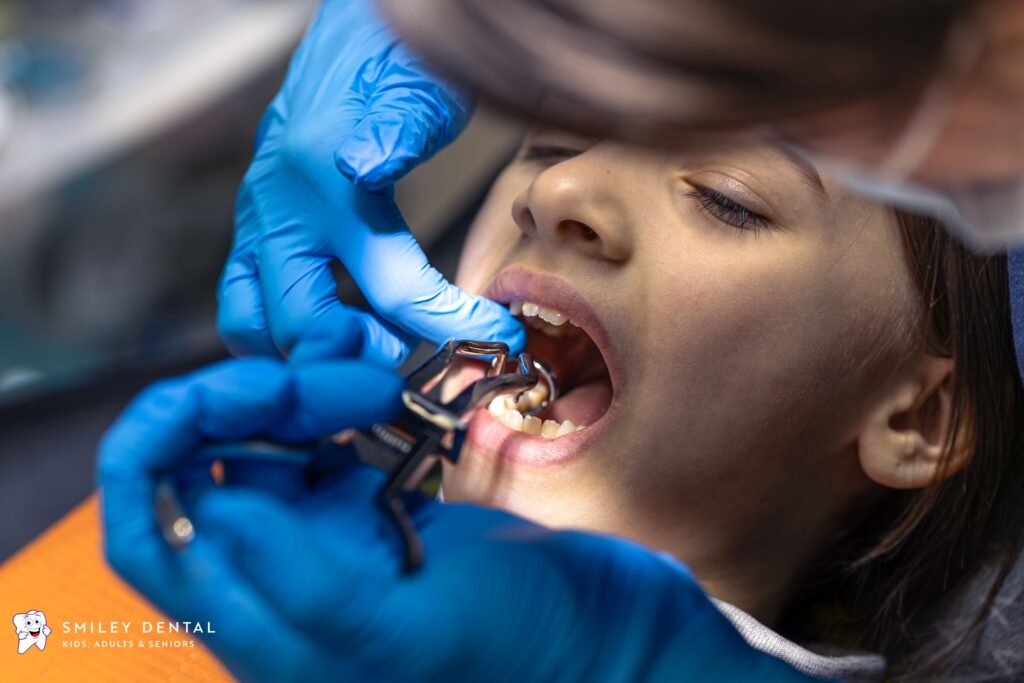
What Is Full Mouth Reconstruction?
Full mouth reconstruction, also called full mouth rehabilitation, is a comprehensive plan to rebuild all or most of the teeth in both jaws. Full mouth reconstruction in Boston combines several treatments to restore health, function, and appearance together.
It is usually needed by people with multiple missing, broken, or worn teeth, widespread decay, gum disease, or bite problems that a single procedure cannot solve. Injury, grinding, and years of dental issues are common causes.
It is different from a smile makeover. A makeover is mainly cosmetic, focused on appearance. Reconstruction is primarily about restorative dentistry, rebuilding a mouth that does not work properly, though it improves looks too. If you are unsure which you need, the top signs you might need a full mouth reconstruction are a helpful starting point.
You May Need Full Mouth Reconstruction If You Have:
✓ Multiple missing teeth
✓ Broken or cracked teeth
✓ Severe tooth wear
✓ Bite problems or jaw pain
✓ Advanced tooth decay
✓ Gum disease
✓ Difficulty chewing or eating
What Procedures Are Included in Full Mouth Reconstruction?
A reconstruction is built from several treatments, chosen to fit your needs. Common ones include:
- Dental implants, to replace missing teeth with a durable, natural-feeling root.
- Crowns, to cap and strengthen damaged or heavily worn teeth.
- Bridges, to fill gaps by anchoring replacement teeth to neighbors.
- Veneers, thin shells that restore the look of front teeth.
- Root canal treatment, to save an infected tooth.
- Tooth extractions, to remove teeth too damaged to save.
- Bone grafting, to rebuild jawbone so it can support implants.
- Gum disease treatment, to create a healthy foundation.
- Dentures, full or partial, when they are the right fit for the case.
Many plans combine dental implants with crowns and bridges and, where needed, porcelain veneers, all staged in a careful order.
How Long Does Full Mouth Reconstruction Take?
The whole process usually unfolds in stages, with healing time built in between. Here is what each stage involves and roughly how long it takes.
Initial Consultation (1 to 2 Weeks)
Your first visit is an exam and conversation about your goals. The dentist assesses your teeth, gums, and bite and explains the broad options, usually within a week or two of reaching out.
Diagnostic Exams and Treatment Planning (1 to 3 Weeks)
Next come digital X-rays, 3D scans, and impressions, which the dentist uses to build your detailed plan and sequence. Thorough dental exams at this stage are what make the rest of the treatment predictable.
Preparatory Procedures (Few Weeks to Several Months)
If you need extractions, gum treatment, or bone grafting, these come first. Grafting in particular adds healing time, sometimes several months, before implants can go in.
Healing Phase (3 to 6 Months for Implants)
If implants are part of your plan, this is usually the longest stage. After the posts are placed, the bone fuses to them, a process called osseointegration, over three to six months. You wear temporary teeth throughout, so you are never without a working smile.
Restorative Treatment (Few Weeks)
Once the foundation is stable, the permanent restorations go on. Crowns, bridges, and veneers are custom-made in a lab over a few weeks, then fitted and refined for a natural look and comfortable bite.
Final Adjustments (1 to 2 Visits)
The last step is fine-tuning. The dentist checks your bite, makes small adjustments, and confirms everything feels right. Then you move into regular maintenance visits.
What Factors Can Affect the Treatment Timeline?
Two people can have very different timelines. These are the main reasons:
- Number of teeth involved: more teeth and more procedures mean a longer plan.
- Overall oral health: decay or infection must be handled first.
- Gum disease: active gum disease has to be treated before restorations.
- Bone loss: if grafting is needed, it adds months of healing.
- Dental implants: implant cases include the osseointegration healing period.
- Healing speed: every body recovers at its own pace.
- Smoking: it slows healing and can extend the timeline.
- Medical conditions: conditions like diabetes can affect healing time.
- Your scheduling: how quickly you can attend appointments.
Your Treatment Timeline May Be Longer If:
Bone grafting is needed to support implants, gum disease requires treatment first, multiple implants are being placed, your healing takes longer than expected, or additional restorative work turns up along the way. None of these are setbacks. They are steps that protect the long-term result, and your dentist plans for them from the start.
Full Mouth Reconstruction Timeline at a Glance
Here is the full sequence in one view. Times are typical ranges, not promises, since every plan is personal:
| Stage | Procedure | Estimated Time | Recovery |
|---|---|---|---|
| Consultation | Exam and goals | 1 to 2 weeks | None |
| Planning | X-rays, scans, plan | 1 to 3 weeks | None |
| Preparation | Extractions, gum care, grafting | Weeks to months | Days to months |
| Healing | Implant integration | 3 to 6 months | Ongoing, with temporaries |
| Restoration | Crowns, bridges, veneers | A few weeks | Minimal |
| Final fitting | Bite adjustments | 1 to 2 visits | Minimal |
Simple cases without implants can finish in weeks. Complex cases with grafting or gum treatment can run beyond a year.
Can Treatment Be Completed Faster?
Sometimes, yes. Cases without implants, like crowns and veneers on healthy roots, can finish in a few weeks. Some implant systems allow temporary teeth the same day as placement, though the permanent teeth still wait for healing.
What you should not rush is the healing stages. Osseointegration and gum healing take the time they take, and skipping them risks implant failure. A good dentist moves as efficiently as your biology safely allows, not faster.
Recovery After Full Mouth Reconstruction
Recovery happens in pieces, after each stage rather than all at once. Here is what to expect:
- After surgery: some swelling and soreness for a few days, eased with medication.
- Eating: stick to soft foods after surgical stages, returning to normal as you heal.
- Oral hygiene: gentle, careful cleaning as directed protects the healing sites.
- Follow-up visits: short checks confirm you are healing on track.
- Normal activities: most return to daily routines within a day or two of each procedure.
How Long Should I Take Off Work?
For a simple extraction or routine visit, many people go back the next day. For surgical or multiple extractions or implant placement, plan on two to three days of rest, and up to a week if several implants or a graft are involved. Desk workers usually return sooner than those doing heavy labor. Your dentist gives specific guidance for each stage.
How Painful Is Full Mouth Reconstruction?
Less than most people fear. The procedures are done under local anesthesia, so you feel pressure rather than pain.
For anxious patients or longer surgical visits, sedation options keep you relaxed and comfortable. Afterward, expect some soreness for a few days, which responds well to standard pain relief and a cold compress. If you have a dental emergency or unexpected pain during treatment, same-day care is available. Most patients say the process was far more manageable than they expected.
Is Full Mouth Reconstruction Worth It?
For most people who need it, yes. The time is a real commitment, but the payoff is significant and lasting:
- Restored function, so you can chew and eat comfortably again.
- A better appearance, with a natural, complete smile.
- More confidence in how you look and speak.
- Better oral health, since a rebuilt mouth is easier to maintain.
- A higher quality of life, from eating favorite foods to smiling freely.
Weighed over the decades a well-built reconstruction can last, the months of treatment are worthwhile.
What Are the Negatives of Full Mouth Dental Implants?
A balanced look means being honest about the downsides too. Implants are excellent, but they are not effortless:
Cost: full-arch implants are a significant investment, often $28,000 to $72,000 for both arches. Our 2026 dental implant cost guide for Boston breaks the numbers down.
- Treatment time: the healing period means the full process takes months.
- Surgery: implant placement is a surgical procedure with a recovery period.
- Bone grafting: some patients need it first, adding time and cost.
- Implant failure risk: rare, but possible, especially with smoking.
- Maintenance: implants need the same daily care and regular checkups as natural teeth.
For most healthy patients these trade-offs are well worth it, and alternatives like a dental implant versus a bridge can be weighed during planning. To learn more about the basics, see our guide on what dental implants are.
Full Mouth Reconstruction vs Dental Implants
These two terms get used almost interchangeably, but they are not the same thing, and mixing them up can lead to the wrong expectations about cost, time, and what your mouth actually needs.
Dental implants are a tool. Full mouth reconstruction is the plan. An implant is a single procedure: a titanium post placed in the jawbone to replace one missing tooth root, topped with a crown once it heals. Full mouth reconstruction is a broader strategy that rebuilds your bite, gum health, and appearance as a connected system, and it often includes implants as one piece of that plan, alongside crowns, bridges, veneers, or gum treatment.
If your mouth is generally healthy and you are only missing one or a few teeth, implants alone may be all you need. If you have a combination of problems, worn or broken teeth, gum disease, bite misalignment, or multiple missing teeth, reconstruction coordinates all of it into one sequenced treatment plan, rather than treating each issue on its own.
| Stage | Procedure | Estimated Time | Recovery |
|---|---|---|---|
| Consultation | Exam and goals | 1 to 2 weeks | None |
| Planning | X-rays, scans, plan | 1 to 3 weeks | None |
| Preparation | Extractions, gum care, grafting | Weeks to months | Days to months |
| Healing | Implant integration | 3 to 6 months | Ongoing, with temporaries |
| Restoration | Crowns, bridges, veneers | A few weeks | Minimal |
| Final fitting | Bite adjustments | 1 to 2 visits | Minimal |
The simplest way to think about it: every full mouth reconstruction could include implants, but not every implant case needs a full reconstruction. A consultation is the only reliable way to know which one fits your mouth, since the right answer depends on how many teeth are affected and what condition the rest of your mouth is in.
Full Mouth Reconstruction vs Smile Makeover
These two often get confused, so here is how they compare:
| Factor | Full Mouth Reconstruction | Smile Makeover |
|---|---|---|
| Purpose | Restore health and function | Improve appearance |
| Procedures | Implants, crowns, grafting, gum care | Veneers, whitening, bonding |
| Treatment time | Several months to a year | Weeks to a few months |
| Cost | Higher, more extensive | Usually lower |
| Best candidates | Damaged or missing teeth | Healthy teeth, cosmetic goals |
| Long-term benefit | Rebuilt, functional mouth | Enhanced smile |
The two overlap, and many reconstructions include cosmetic touches. If your goals are mainly cosmetic, our cosmetic dentistry options may be the better route.
How Dentists Create a Personalized Treatment Timeline
Your timeline is not a guess. It is built from real diagnostic data:
- Digital X-rays reveal decay, bone levels, and hidden problems.
- CBCT 3D scans map the jawbone in detail for precise implant planning.
- Oral examination checks the health of every tooth and the gums.
- Bite analysis studies how your teeth meet, which guides the rebuild.
- Treatment sequencing orders the steps so each one supports the next.
From this, the dentist maps a plan that treats health first, then function, then appearance, the sequence that produces stable, lasting results.
How to Prepare for Full Mouth Reconstruction
✓ Attend a thorough consultation and ask questions
✓ Share your full medical history and medications
✓ Get your oral hygiene in the best shape you can
✓ Stop smoking, or cut back, to support healing
✓ Plan for recovery time around surgical stages
✓ Follow your dentist’s pre- and post-care instructions
Why Choose Smiley Dental Boston?
Our Boston dental office brings the full range of restorative care together under one roof, so your entire reconstruction is planned and delivered by one team that knows your case. We serve Roslindale, West Roxbury, Jamaica Plain, Hyde Park, Mattapan, and Dorchester.
- Experienced restorative dentists who plan and sequence complex cases with care.
- Comprehensive treatment planning, so every stage is mapped before you begin.
- Modern technology, including digital imaging and 3D planning for precise results.
- Personalized, comfortable care, with sedation options and a gentle approach.
- Flexible payment options, with financing and most major insurance accepted.
We also offer flexible patient financing to make treatment manageable. Ready to start? Request an appointment or reach our Boston team for a personalized timeline.
The Bottom Line
Full mouth reconstruction timelines vary because every mouth is different. Most take several months to a year, with implant healing being the longest stretch, and each stage is spaced to let your mouth heal properly before the next begins. That patience is exactly what makes the result stable and long-lasting.
Completing every stage the right way, guided by careful planning, is what protects your oral health for decades. If you are considering full mouth reconstruction, the best first step is a consultation to get a timeline built around your mouth. Contact Smiley Dental Boston at 857-888-8000 to schedule a consultation and receive a personalized treatment plan.
Get your personalized treatment timeline.
Schedule a full mouth reconstruction consultation at Smiley Dental Boston. Call 857-888-8000 or request an appointment online. Find us at 950 American Legion Hwy, Roslindale. New patients are always welcome.
Frequently Asked Questions
Almost never. Because it involves multiple procedures and healing time, reconstruction is staged over several visits and usually several months. Some implant systems place temporary teeth in one day, but the full, permanent result still takes time.
It varies widely by case. Simple plans may need a handful of visits, while complex ones involve many appointments spread over months. Your dentist outlines the expected number in your treatment plan after the initial exam.
Implants extend treatment because the bone needs three to six months to fuse to the posts before the final teeth go on. If bone grafting is needed first, that can add several more months. Temporary teeth keep you functional throughout.
Yes, in most cases. Between stages you carry on normally, often with temporary teeth. You may want a day or two off around surgical steps like extractions or implant placement, but the treatment does not stop your everyday life.
Usually, yes. Temporary or provisional restorations let you eat, speak, and smile while the permanent teeth are made and while implants heal, so you are not left without teeth at any stage.
It depends on the procedure. Soft-tissue healing after an extraction takes days to a couple of weeks, while implant integration takes three to six months. Your dentist times each stage around proper healing to protect the result.
Yes. Local anesthesia is standard, and sedation options are available for anxious patients or longer surgical visits, keeping you relaxed and comfortable throughout. Talk to your dentist about which option suits you.
With good care, results last many years and often decades. Implants can last a lifetime for many patients, while crowns and bridges may need replacement over time. Daily hygiene and regular checkups make them last longer.
Often partially. Medically necessary procedures like extractions or gum treatment may receive coverage, while implants are frequently treated as elective. We verify your benefits and provide a written estimate and financing options.
You move into maintenance, with regular checkups and cleanings to protect your investment. Good daily hygiene and routine visits keep your rebuilt smile healthy and long-lasting for years to come.