Quick Answer
Professional teeth whitening in Boston typically costs $300 to $800 for in-office treatment and $200 to $500 for take-home custom trays. Store-bought whitening kits cost $20 to $60 but give weaker, shorter-lasting results. Most patients see visibly whiter teeth, 3 to 8 shades lighter, after one in-office session, with results lasting 1 to 3 years depending on care.
If your smile has lost some of its shine from coffee, tea, red wine, or simply time, teeth whitening is one of the fastest ways to brighten it. Teeth whitening in Boston ranges from professional in-office treatments to dentist-supervised take-home trays and ADA-approved over-the-counter strips. It’s one of the most popular treatments within cosmetic dentistry, and the right option depends on your staining, sensitivity, and how quickly you want results. This guide explains how teeth whitening works, what to expect, and how to choose the safest, most effective treatment for your smile.
What Is Teeth Whitening?
Teeth whitening is a cosmetic dental treatment that uses peroxide-based gel to break down the compounds that cause tooth discoloration. It targets two types of stains:
- Extrinsic stains sit on the surface of the enamel and are caused by coffee, tea, red wine, tobacco, and certain foods. These respond well to most whitening methods.
- Intrinsic stains develop inside the tooth, often from aging, certain medications, or old dental trauma. These typically require professional-strength treatment to see meaningful change, and in some cases porcelain veneers may be a better long-term solution.
Anyone with healthy teeth and gums who wants a brighter smile may be a candidate. Patients with cavities, gum disease, or exposed roots should have those issues treated first, since whitening gel can irritate compromised tissue.
Signs You May Benefit From Teeth Whitening
You might be a good candidate for whitening if you notice:
- Teeth that look noticeably yellow or dull compared to your natural shade
- Stains from years of coffee, tea, wine, or smoking
- A special event, wedding, or job change coming up
- Whitening toothpaste and strips no longer making a visible difference
- Confidence in your smile has dropped due to discoloration
If any of these sound familiar, a dental exam is the best next step to confirm whitening is appropriate for you.
Benefits of Professional Teeth Whitening
- Faster, more dramatic results: In-office treatments can lighten teeth by several shades in about an hour, compared to weeks of gradual change with over-the-counter kits.
- Safer for your enamel and gums: A dentist evaluates your teeth beforehand, protects your gums during treatment, and uses professional-grade materials designed for oral tissue. This matters because household or unregulated products are not formulated for safe contact with your mouth and can cause harm if misused.
- Longer-lasting results: With good oral hygiene and reduced intake of staining foods and drinks, professional whitening results typically last one to three years, longer than most drugstore products.
- Boosted confidence: A brighter smile often makes people feel more comfortable in photos, at work, and in social settings.
- Customized to your needs: Dentists can adjust peroxide concentration and use desensitizing protocols for patients with sensitive teeth, something at-home kits cannot offer.
Teeth Whitening Treatment Process
A typical professional teeth whitening visit includes:
- Consultation – Your dentist reviews your dental history, current shade, and whitening goals.
- Oral examination – Checking for cavities, gum disease, or other issues that need to be addressed first.
- Shade assessment – Recording your starting tooth color to measure results.
- Gum protection – A protective barrier or gel is applied to shield your gums from the whitening agent.
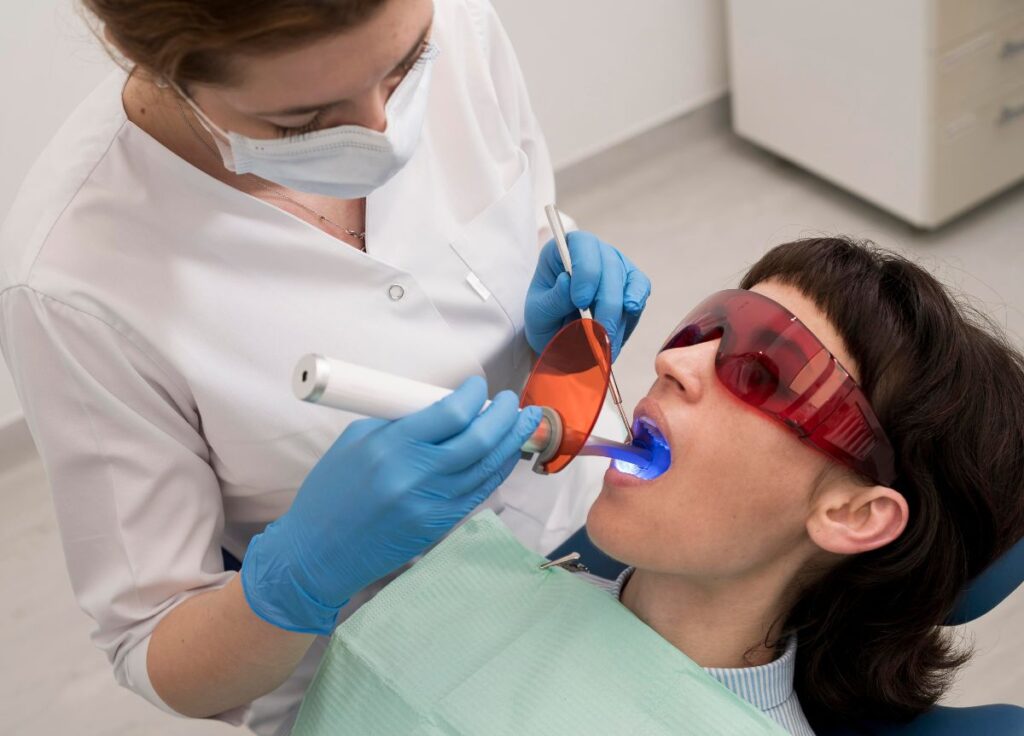
- Whitening application – Peroxide-based gel is applied to the teeth, sometimes activated with a special light, depending on the system used.
- Rinsing and shade comparison – Your dentist checks the new shade and may repeat the application for additional lightening.
- Aftercare guidance – You’ll receive tips on maintaining results, including avoiding staining foods and drinks for the first 24 to 48 hours.
For patients who prefer a gradual approach, custom take-home trays are also available, allowing you to whiten at your own pace with dentist-approved, professional-strength gel. Pairing whitening with regular dental cleaning visits also helps your results last longer by keeping surface stains from building back up.
What Affects the Cost of Teeth Whitening
Teeth whitening cost varies based on several factors rather than a single fixed price:
- Treatment type – In-office whitening typically costs more upfront than take-home trays or OTC strips, but delivers faster, longer-lasting results.
- Severity of staining – Deeper or intrinsic stains may require additional sessions.
- Number of teeth treated – Whitening a full smile versus a few visible teeth affects overall cost.
- Materials used – Professional-grade gels and custom trays cost more than generic kits but are formulated for safety and effectiveness.
- Additional dental work needed – If cavities or gum issues need treatment first, this adds to the overall investment in your smile.
During your consultation, your dentist can walk you through pricing options based on your specific goals.
Does Teeth Whitening Damage Your Teeth?
This is one of the most common questions patients ask, and it’s a reasonable one. When performed under professional supervision, teeth whitening does not permanently damage enamel. The treatment can cause temporary tooth dehydration, which is why some patients notice short-term sensitivity, but this typically resolves within a day or two as saliva naturally rehydrates the enamel.
The bigger risk comes from unsupervised or unregulated products, particularly high-concentration formulas not intended for dental use, or abrasive options like charcoal powders. These can wear down enamel over time and may actually make teeth look more yellow by exposing the darker dentin layer underneath. This is why choosing ADA-approved products or a dentist-supervised treatment matters.
It’s also worth noting that whitening gel only works on natural tooth enamel. If you have crowns, bridges, or tooth-colored fillings, these restorations will not change color, which your dentist can factor into your treatment plan.
Why Choose Smiley Dental Boston
Smiley Dental Boston offers professional teeth whitening designed around your comfort, safety, and goals. Our dentists start with a full oral exam to make sure whitening is the right choice for you, then recommend a treatment plan using modern, dentist-grade materials. Patients throughout Boston and Roslindale choose Smiley Dental Boston for personalized care, a comfortable office environment, and a team that explains every step of the process in plain language. Whether you want dramatic same-day results or a gradual take-home option, Smiley Dental Boston can help you find the right fit.
Ready for a Brighter Smile?
Teeth whitening is one of the simplest ways to refresh your smile, but the safest and most effective results come from a treatment plan built around your specific teeth and needs. Schedule an appointment with Smiley Dental Boston today and let our team help you find the right whitening option for a brighter, healthier smile. Have questions first? Feel free to contact us. We’re happy to help.
Frequently Asked Questions
Results generally last one to three years, depending on your diet, oral hygiene habits, and how much staining food and drink (like coffee, tea, and red wine) you consume afterward.
Yes, in most cases. A dentist can use desensitizing treatments, lower peroxide concentrations, or alternative formulas to make whitening comfortable for patients with sensitive teeth.
Many patients see several shades of improvement with professional in-office whitening, though results vary based on your starting shade and the type of staining involved.
Professional whitening tends to work faster and produce more noticeable, longer-lasting results because it uses stronger, dentist-supervised formulas. Whitening toothpaste and ADA-approved strips can help with mild surface stains and maintaining results between professional treatments.
This depends on your individual staining habits and oral health, so it’s best to ask your dentist for a personalized recommendation rather than following a fixed schedule.
Not always. Surface stains from food, drinks, and tobacco typically respond well. Deeper, intrinsic stains from aging or certain medications may need additional or alternative treatments, such as veneers, for full correction.