
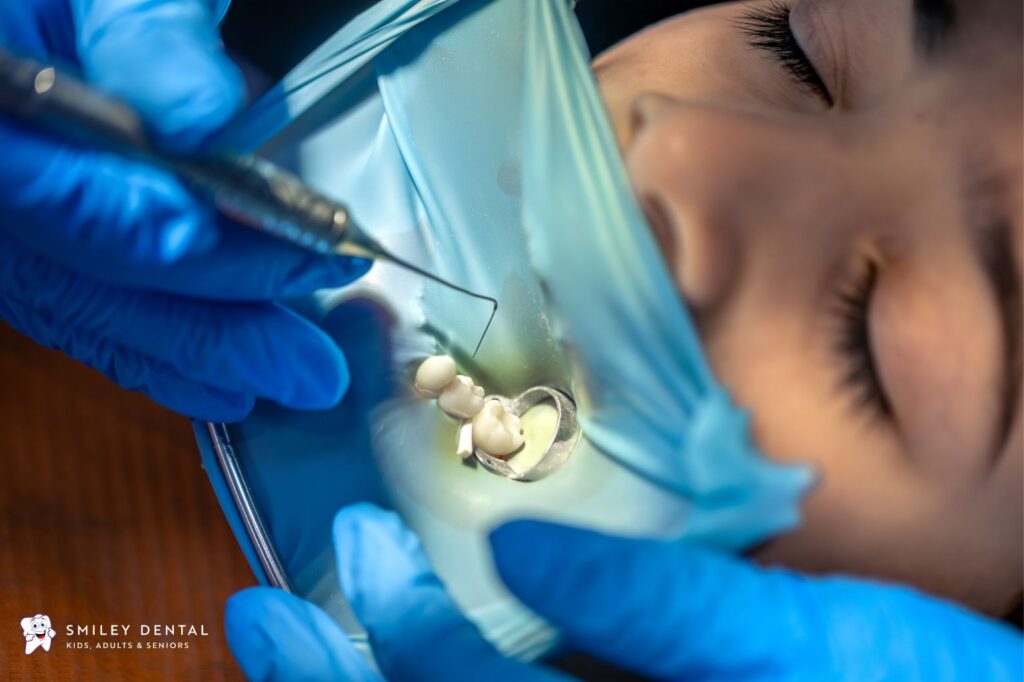
If your dental filling fell out, try not to panic. The tooth may not hurt right away, but it still needs attention, since the filling was protecting an area of weakened tooth structure underneath. Gently clean the area, avoid chewing on that tooth, and contact your dentist to have it looked at as soon as you reasonably can.
Quick Answer: If your dental filling falls out, gently clean the area, avoid chewing on that tooth, and contact your dentist for an evaluation. A temporary dental filling material can help protect the tooth until you’re seen. Seek urgent care if you develop severe pain, significant swelling, uncontrolled bleeding, or trouble breathing or swallowing.
What Should You Do Immediately If Your Dental Filling Falls Out?
The moment you realize a filling has come out, the goal is simply to protect the exposed tooth until you can get to a dental exam.
Rinse and gently clean the area
Rinse with warm water to clear away any loose debris or filling fragments. This lets you see the area clearly and cuts down on irritation.
Avoid chewing on the affected tooth
Without the filling, the exposed tooth is much more vulnerable to pressure, temperature, and bacteria. Try to chew on the opposite side until it’s repaired.
Avoid very hot, cold, sticky, or sugary foods if sensitive
Extreme temperatures and sticky or sugary foods tend to irritate an exposed tooth or pull at the cavity, so it’s worth steering clear of them for now.
Protect the tooth temporarily if needed
An over the counter temporary filling material or dental wax can cover a sharp edge or ease sensitivity for a short while. Think of it as a stopgap, not a substitute for professional treatment.
Contact your dentist
Call your dental office and explain what happened. They’ll be able to tell you whether you need same day care or whether a routine appointment will do.
Is a Lost Filling a Dental Emergency?
In most cases, a lost filling is not a life threatening emergency, but it still needs prompt attention. The real question comes down to your symptoms.
Usually not an emergency: mild sensitivity or no pain at all, no visible swelling, a small area of exposed tooth.
Needs urgent attention, and possibly same day emergency care: severe or worsening pain, significant swelling, signs of infection such as a bad taste or fever, trouble swallowing or breathing, uncontrolled bleeding, or a major tooth fracture.
Severe swelling that affects your ability to breathe or swallow is a medical emergency, not something to wait out.
How Long Can I Go If My Filling Fell Out?
A lost filling shouldn’t be ignored, even if it doesn’t hurt. Contact your dentist so they can help you figure out how quickly it needs treatment. The right timeframe really depends on your pain level, sensitivity, any swelling, how much of the tooth is exposed, and whether the tooth itself is cracked or decayed.
There isn’t a set number of days that’s safe for everyone. A small filling that came out cleanly, with no pain, is a very different situation from a large filling loss on a tooth that already has a crack or visible decay. Waiting longer generally raises the risk that the exposed area picks up new decay, develops a crack, or gets sensitive enough to interfere with eating.
If you’re not sure which situation you’re in, that’s reason enough to call your dentist rather than guess. Sometimes a same day or next day visit makes sense. Other times, working it into your regular schedule is perfectly fine. Your dentist can help you sort that out over the phone.
Why Do Dental Fillings Fall Out?
Fillings rarely fail for just one reason. Usually it’s a combination of factors.
Normal wear and aging
Every filling material has a functional lifespan. Years of biting and temperature changes gradually wear down the bond between the filling and the tooth.
New or recurrent tooth decay
Decay can form right at the edge where the filling meets the natural tooth. As it spreads, it slowly undermines the filling’s support until it comes loose.
Cracked or weakened tooth structure
A crack beneath or around a filling can let the restoration shift or pop out, especially under the pressure of biting.
Large fillings
The more tooth structure a filling replaces, the less natural tooth is left to hold it in place. That makes larger restorations more prone to failure over time.
Heavy biting forces or grinding
Clenching or grinding your teeth, also known as bruxism, puts extra stress on fillings, particularly older ones, and can speed up wear or fracture.
Restoration failure
Sometimes a filling just fails on its own. The material can shrink, wear unevenly, or lose its seal, and none of that has anything to do with something you did.
No single cause is always to blame, which is exactly why an in person exam is the only real way to know what happened with yours.
How Rare Is It for a Filling to Fall Out?
There’s no single statistic that applies to everyone here, because how likely a filling is to fail depends on several individual factors rather than a fixed rate. The American Dental Association points out that no filling lasts forever, and durability varies based on the material used and the specific situation.
Factors that affect how likely a filling is to fail include:
- Filling material, since some materials wear or bond differently than others
- Size, as larger fillings generally take on more mechanical stress
- Location, because back teeth handle more biting force than front teeth
- Age of the filling, since older restorations have simply had more time to wear
- Tooth condition, as a tooth with a prior crack or existing decay carries more risk
- Biting forces and oral habits, including grinding, clenching, and chewing hard foods
Given all that variability, be cautious of anything that hands you a specific percentage chance of failure without pointing to a study that actually applies to your case.
Would It Hurt If a Filling Fell Out?
It may hurt, but it may also cause little to no discomfort at all. Both are common, and neither one tells you how serious the underlying issue actually is.
Possible symptoms: sensitivity to cold, heat, or sweets; pain when biting down; a sharp edge catching your tongue; a dull toothache; throbbing pain; or nothing noticeable at all.
Here’s the part worth remembering: having no pain doesn’t mean the tooth is fine. Decay or a structural problem can develop quietly underneath long before it ever becomes painful, which is exactly why an exam matters even if you feel completely fine.
How Do Dentists Fix a Filling That Fell Out?
Treatment tends to follow a fairly predictable path, though the exact outcome depends on what the dentist actually finds.
Step 1: Dental examination
Your dentist checks the remaining filling material, the tooth structure, and the cavity itself, and looks for cracks, decay, sensitivity, and the condition of the surrounding gum tissue.
Step 2: X-ray when needed
An X-ray may be recommended if the dentist needs to evaluate decay or structural issues that aren’t visible during a direct exam.
Step 3: Determine the appropriate treatment
Based on what they find, a few outcomes are possible:
- New filling, if enough healthy tooth structure remains
- Temporary filling, to protect the tooth short term before a more permanent fix
- Crown or other restoration, if there’s significant structural damage or the original filling was large
- Root canal treatment, if the tooth’s pulp has become irreversibly inflamed or infected
- Extraction, only in cases where the tooth genuinely can’t be restored
A filling can fall out even when the tooth doesn’t hurt at all. During the exam, the dentist’s job is to figure out whether the problem is limited to the filling itself, or whether the tooth underneath has recurrent decay, a crack, or deeper damage that needs a different approach. Not every lost filling ends in a crown or a root canal. Plenty are simply replaced with a new filling once the tooth has been evaluated.
Can You Eat After Your Filling Falls Out?
Yes, but it’s worth adjusting what and how you eat until the tooth gets repaired.
Better choices: soft foods, lukewarm foods, and anything that requires less chewing.
Avoid if sensitive: very hot or cold foods, sticky foods, hard foods, and very sugary foods.
Chewing on the opposite side of your mouth will also help reduce irritation and protect the exposed area.
What Should You Avoid After a Filling Falls Out?
A few simple precautions can keep things from getting worse before your appointment:
- Don’t chew hard foods on that side
- Don’t repeatedly poke or prod at the tooth
- Don’t ignore pain that’s getting worse
- Don’t put household glue on the tooth. It isn’t made for use in the mouth and isn’t a safe substitute for dental cement
- Don’t try to do permanent dental work yourself
- Don’t assume that no pain means no problem
How Can You Prevent a Filling From Falling Out?
Not every filling failure can be prevented, but good habits go a long way toward reducing the risk:
- Brush twice daily with fluoride toothpaste
- Floss or use interdental cleaners daily
- Keep up with regular dental exams and cleanings
- Manage teeth grinding or clenching, for example with a nightguard
- Limit frequent sugary snacks and drinks
- Address cracks or recurrent decay early, before they undermine a restoration
The ADA recommends these same habits, brushing, flossing, a balanced diet, and regular visits, as core prevention for cavities and restoration problems in general.
When Should You See a Dentist?
Contact your dentist promptly if: the filling has completely fallen out, the tooth feels sensitive or sharp, you have pain when biting, food keeps getting trapped, you notice a crack, or symptoms seem to be getting worse.
Seek urgent or emergency care if: severe swelling develops, especially around the face or neck, you have trouble breathing or swallowing, bleeding won’t stop, or severe pain isn’t controlled by over the counter medication.
If you’re in the Roslindale or greater Boston area and your filling has fallen out, reaching out to a local dental office can help you quickly figure out whether you need routine or same day care.
Frequently Asked Questions
Rinse gently, avoid chewing on that tooth, protect it temporarily if needed, and contact your dentist.
Usually not life threatening, but it still needs prompt evaluation, especially if there’s pain, swelling, or a cracked tooth involved.
Yes, but favor soft, lukewarm foods and chew on the other side until it’s repaired.
Yes. Just keep brushing gently around the exposed area.
Common causes include normal wear, new decay, a cracked tooth, a large filling, grinding, or the restoration simply reaching the end of its life.
No, it can’t simply be popped back in. Your dentist will clean the area and place a new restoration.
Often, yes, though it really depends on what the exam reveals about the tooth underneath.
Yes, that’s actually quite common. Painless doesn’t mean the tooth is fine. It still needs to be checked.
The exposed tooth becomes more vulnerable to decay, sensitivity, and fracture, and small problems tend to grow into bigger ones.
It’s possible if decay or bacteria reach the inner part of the tooth. Watch for swelling, worsening pain, or a bad taste.
If you have severe pain, significant swelling, bleeding that won’t stop, or trouble breathing or swallowing, seek urgent care right away.
The Bottom Line
A lost filling is common, and in most cases it’s manageable with a prompt visit to your dentist, not necessarily an immediate one. Protect the tooth in the meantime, keep an eye out for warning signs like worsening pain or swelling, and don’t assume that painlessness means there’s nothing to address.
If your filling has fallen out and you’re in the Boston area, Smiley Dental Boston can take a look and walk you through the right next step, whether that’s a new filling, a crown, or simple reassurance that a routine repair will do the job.