The right pediatric dentist has real experience with children, explains things in a way kids and parents understand, focuses on prevention, and makes your child feel comfortable. Star ratings are a useful starting point, but they are only one piece of the picture.
Starting early with a dentist your child trusts can make routine visits feel normal instead of scary. It also helps small problems get caught while they are still easy to treat.
Below, we cover what to look for, what to ask, and how to compare your options, from location and insurance to emergency care.
Quick Answer: How Do You Choose the Right Pediatric Dentist for Your Child?
Look beyond ratings. Consider the dentist’s experience with children, communication style, preventive approach, range of children’s services, and how comfortable your child feels in the office. Ask about first visits, anxiety support, fluoride, sealants, emergency care, insurance, and scheduling. A good fit is a practice that meets your child’s dental needs while helping both you and your child feel informed and at ease.
What Is a Pediatric Dentist?
A pediatric dentist is a dental professional who focuses on the oral health of children, from infants through adolescents. Their work centers on preventive care, monitoring how teeth and jaws develop, and treating common childhood dental problems in a child-friendly way.
Many general and family dentists also treat children, so “children’s dentist” can mean different things from one office to another. If a practice describes itself as a pediatric specialist, it’s fair to ask about the dentist’s training.
What Is the Difference Between a Pediatric Dentist and a Family Dentist?
A pediatric dentist focuses on children and adolescents. A family dentist treats patients of many ages, often including children. Neither is automatically better, and we explain how to decide below.
What Makes a Dentist Child-Friendly?
A child-friendly practice is one where kids feel welcome and parents feel heard. That usually means:
- Staff who speak to children in simple, calm language
- Time for questions from both child and parent
- Clear explanations of what is happening and why
- A gradual, patient approach for nervous children
- Parents included in every recommendation
A play area or bright decor is nice, but it doesn’t guarantee good care. How the team interacts with your child matters more.
How to Choose the Right Pediatric Dentist for Your Child
Start with a few practical checks, then trust your impressions during a call or visit.
1. Look for Experience With Children
Ask which ages the dentist regularly sees. Treating a nervous three-year-old is different from seeing a teenager. Years in practice alone don’t prove quality, so also ask how the team explains procedures and supports young patients.
2. Consider How the Dentist Helps Children Feel Comfortable
Watch how the team talks to your child. Do they use age-appropriate language? Do they introduce each tool and step before using it? No dentist can promise a child will never feel nervous, but a patient, predictable approach makes a real difference.
3. Check the Range of Children’s Dental Services
Routine and changing needs are easier to manage in one place. Ask whether the office offers:
- Exams and cleanings
- Fluoride treatments
- Dental sealants
- Fillings and other treatment
- Oral-health education for parents
- Evaluation of tooth injuries and dental emergencies
Services vary by practice, so confirm what is available.
4. Pay Attention to Parent Communication
You should leave each visit understanding what the dentist found, what is recommended and why, what the alternatives are, what to do at home, and when to come back. If explanations feel rushed or unclear, keep looking.
5. Consider Location, Insurance, and Scheduling
Routine care only works if you can get to appointments. Check office hours, new-patient availability, accepted insurance, and whether family members can be scheduled together.
How Do I Find a Good Pediatric Dentist?
Search for local practices, then look closely at each one:
- Read the website. Look for a dedicated children’s dentistry page, provider information, and details about first visits.
- Read several reviews. Look for patterns, not single comments.
- Call the office. Ask a few questions and notice how helpful the response is.
- Ask other parents. Friends, family, and your child’s pediatrician may have useful experiences to share.
- Consider an introductory visit if the office offers one.
How Much Should You Trust Online Reviews?
Reviews are one data point, not proof of clinical quality. Repeated comments about child comfort, friendly staff, clear explanations, scheduling, and wait times tell you more than one glowing or angry review. For a parent, “top-rated” should mean consistent, believable feedback about the experience, combined with the other factors above.
Is a Pediatric Dentist Better for Kids?
Not necessarily for every child. A pediatric dentist has training focused on children’s oral health, while many family dentists also provide good care for children. The right choice depends on your child’s age, dental needs, anxiety level, treatment complexity, the practice’s experience with children, and your family’s preferences.
| What to Consider | Pediatric Dentist | Family Dentist Who Treats Children |
| Primary patient focus | Children and adolescents | Multiple age groups |
| Experience with children | Child-focused | Children are part of broader family care |
| Family convenience | Depends on the practice | Often convenient for whole-family care |
| Child-focused environment | May be designed for children | Varies by office |
| Parent communication | Important | Important |
| Preventive care for children | Available, depending on the practice | Available, depending on the practice |
| Treatment for adults | Usually limited | Often available |
| Emergency care | Depends on the practice | Depends on the practice |
| Insurance | Varies | Varies |
| Best choice | Depends on the child’s needs | Depends on the child’s needs |
A pediatric focus may be especially helpful for very young children, kids with significant dental anxiety, or children with complex medical or behavioral needs. A family practice can work well for routine care and for families who want one dental home. For broader family considerations, see our guide to choosing the right dentist in Boston for your family.
At What Age Should a Child Begin Seeing a Pediatric Dentist?
The American Academy of Pediatric Dentistry (AAPD) and the American Dental Association (ADA) both recommend a first dental visit when the first tooth appears, and no later than a child’s first birthday.
Early visits let a dentist check how teeth are developing and answer questions about brushing, feeding habits, fluoride, and pacifier or thumb-sucking. They also help your child get used to the dental office before there is any problem. You can read more in our post on early dental care for kids.
Baby teeth matter, too. They help children eat and speak, and they hold space for permanent teeth. Our guide on why baby teeth are more important than you think explains more.
What Happens During a Child’s First Dental Visit?
Every office and age is different, but a first visit often includes:
- A review of your child’s health and dental history
- A conversation about feeding, brushing, and habits
- A gentle look at the teeth, gums, and how the mouth is developing
- A discussion of fluoride and home care
- Time for your questions
- A plan for follow-up
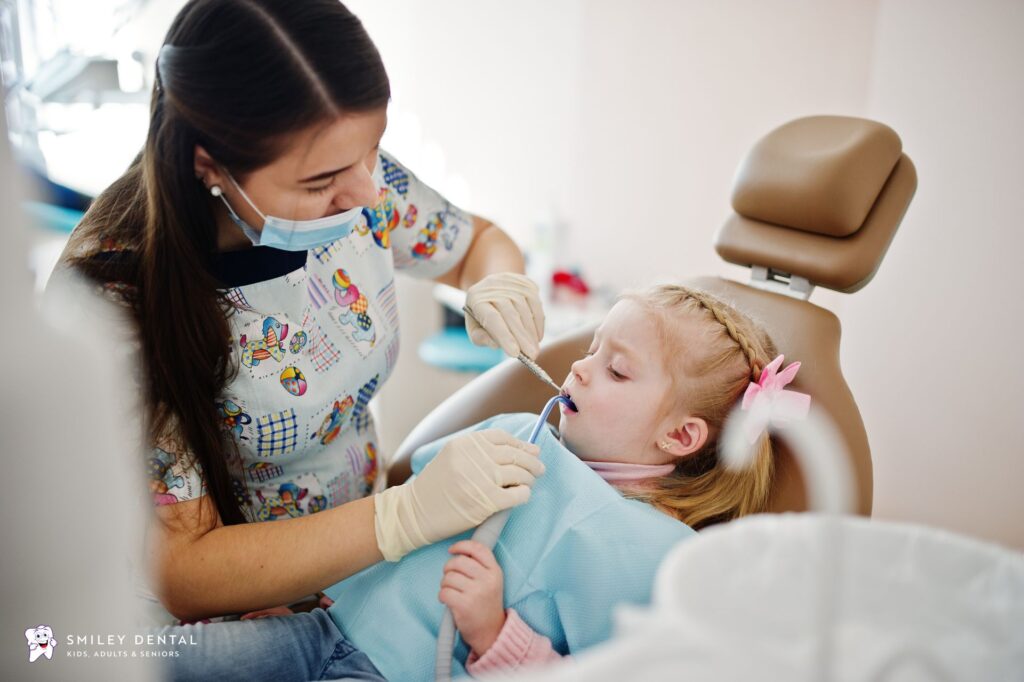
For babies and toddlers, the visit may be short and simple, and a parent may hold the child. X-rays are not part of every first visit. The dentist decides based on age and need. A routine dental exam for older children typically includes a cleaning as well.
How Can Parents Prepare a Child for the Dentist?
- Explain the visit simply and positively, for example, “The dentist will count and look at your teeth.”
- Avoid scary words, and don’t promise that nothing will hurt.
- Tell the office about any past difficult experiences.
- Bring dental and medical information, and follow any instructions from the office.
- Let your child ask questions.
How Can a Dentist Help an Anxious Child?
Dentists can use calm explanations, simple language, a predictable routine, and positive reinforcement to help nervous children feel more at ease. Many offices introduce tools slowly and let the child ask questions before anything begins. Routine nervousness does not usually require sedation.
Let the office know ahead of time if your child is very anxious. The team can plan the visit around your child’s needs. No dentist can promise a fear-free experience, but the right approach can make a big difference over time.
Why Is Preventive Dental Care Important for Children?
Regular exams, cleanings, good home brushing, healthy eating habits, and, when recommended, fluoride and sealants help find problems early and lower cavity risk. Prevention can’t guarantee a child will never get a cavity, and a cavity doesn’t mean a parent has failed. It simply gives your child a stronger start.
How often a child should visit depends on age, cavity risk, oral-health history, and the dentist’s recommendation, so there isn’t one schedule for everyone. Learn more about preventive dental care and professional cleanings. Flossing matters too, and our post on why brushing isn’t enough explains why.
Are Fluoride Treatments and Dental Sealants Helpful for Children?
Fluoride helps strengthen teeth and lower cavity risk. Whether a child needs professional fluoride depends on age, cavity risk, and existing exposure, such as toothpaste and community water. Your dentist can advise you. Our post on fluoride treatments explains how they work.
Sealants are thin protective coatings placed on the chewing surfaces of back teeth, which often have deep grooves where food and bacteria collect. The CDC notes that sealants can prevent up to 80% of cavities in back molars over two years. They aren’t right for every tooth or child, and they don’t remove all cavity risk. Learn more about dental sealants.
Do Teenagers Still Need Pediatric Dental Care?
Yes. Teens are still growing, and their needs change. A dentist can help with brushing independence, sugary drinks, orthodontic coordination, wisdom teeth monitoring, and sports safety. If your teen plays sports, ask about mouthguards. Keep the conversation supportive rather than judgmental, since teens respond better to it.
When Does a Child Need an Emergency Dentist?
Contact a dentist promptly for:
- A knocked-out permanent tooth
- A chipped or broken tooth
- Significant mouth or face injury
- Severe toothache
- Facial swelling or signs of infection
- Bleeding after an injury
Call the dental office right away rather than trying home fixes. Ask any practice you’re considering how it handles urgent visits, and don’t assume same-day availability. Read more about emergency dental care and the signs of a dental emergency.
What Should Parents Ask Before Choosing a Pediatric Dentist?
- Do you regularly treat children my child’s age?
- What happens during the first visit?
- How do you help nervous children?
- Do you offer preventive care, fluoride, and sealants?
- Do you treat dental emergencies?
- How are parents involved in treatment decisions?
- What happens if my child needs a specialist?
- Which insurance plans do you accept, and are you accepting new patients?
- What are your hours?
Insurance and Cost
Costs vary by visit type, preventive versus restorative care, X-rays, fluoride, sealants, and your benefits, so there’s no single average price. Ask whether preventive services, fluoride, and sealants are covered, whether there are frequency limits, and what you’d pay out of pocket. You can review our accepted insurances and confirm your specific plan with the office.
Pediatric Dentist in Boston, MA
For Boston families, the same principles apply, with a few practical points. Consider office hours, parking or transit, and school schedules. If you live in Roslindale, Hyde Park, Mattapan, Jamaica Plain, or nearby, you may have both family and children’s dentists close by. Weigh the factors above rather than simply choosing the closest office.
Smiley Dental Boston, located at 950 American Legion Hwy in Roslindale, offers children’s dentistry, including preventive care, cleanings, and emergency visits for kids. We encourage you to ask questions and see if it feels right for your child.
Frequently Asked Questions About Choosing a Pediatric Dentist
Look at experience with children, communication, preventive care, services, comfort, insurance, and location. Use the questions above.
Check qualifications, read several reviews for patterns, review services, call with questions, and ask other parents.
Not always. The right fit depends on your child’s age, needs, and comfort, and on the practice.
When the first tooth appears, and no later than the first birthday, according to AAPD and ADA guidance.
Usually a health history, a gentle exam, a talk about home care, and time for questions. It varies by age and office.
Keep it simple and positive, avoid scary words, and share past experiences with the office.
It depends on your child’s needs. Your dentist will recommend a schedule.
Either can be a good choice. Consider your child’s age, needs, anxiety level, and your preferences.
Tell the office in advance, stay calm and positive, and choose a team that goes at your child’s pace.
Yes. We offer children’s dentistry, including preventive care, cleanings, and emergency visits.
Ready to Take the Next Step?
Looking for children’s dental care in Boston? Start by asking about the practice’s experience with children, first-visit approach, preventive services, insurance options, and how the dental team helps young patients feel comfortable. Smiley Dental Boston can help parents learn more about children’s dental care and available appointments. Request an appointment or visit our patient resources page to get started.