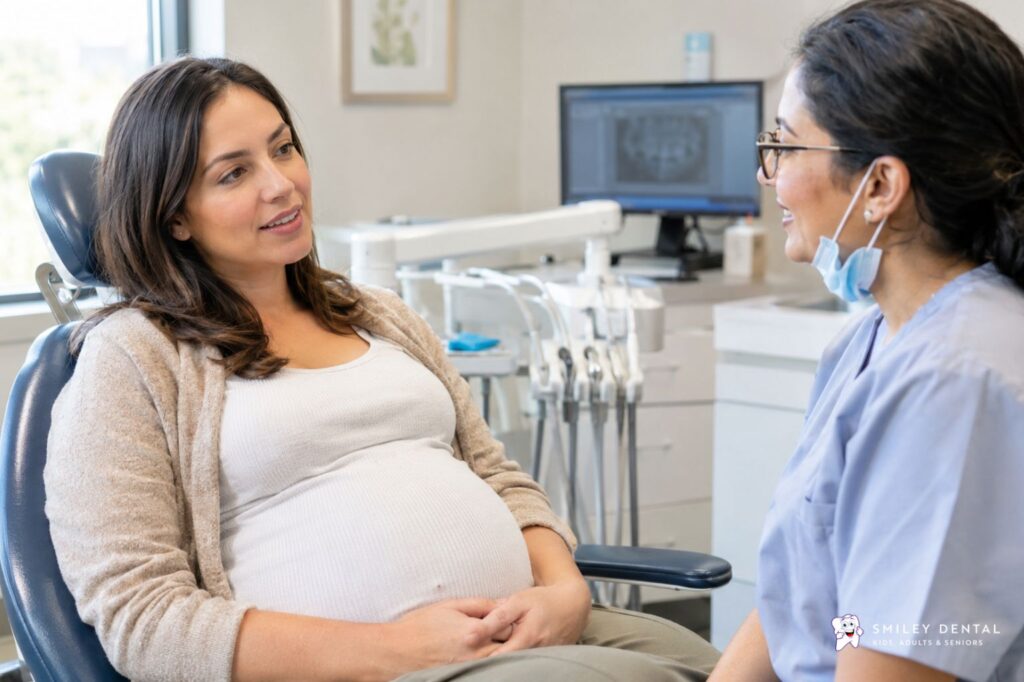
Pregnancy can change your mouth, which is why oral health matters just as much now as it did before. Hormonal changes can make your gums more sensitive or more likely to bleed. Morning sickness can expose your teeth to stomach acid. Brushing, flossing, and regular dental cleanings still help protect your teeth and gums.
Some expecting moms also notice dry mouth, tender gums, or new snacking habits. None of this means you will have dental problems. It means your mouth may need a little extra attention.
Dental care is generally considered safe during pregnancy. Tell your dentist you’re expecting so they can plan your care around you.
Quick Answer: What Are the Important Oral Health Considerations During Pregnancy?
Pregnancy hormones can make gums more sensitive and prone to inflammation or bleeding. Morning sickness can expose teeth to acid. Keep brushing with fluoride toothpaste, clean between your teeth daily, eat a balanced diet, and keep your dental appointments. Tell your dentist you’re pregnant. Share any medications or medical conditions, and ask your prenatal care provider if you have questions about your care.
How Does Pregnancy Affect Your Teeth and Gums?
Not every pregnant woman notices changes in her mouth. Here are the ones that are most common.
Pregnancy Gingivitis and Bleeding Gums
Why do gums bleed during pregnancy? Hormonal changes can make your gums react more strongly to plaque, the sticky film of bacteria on your teeth. That can lead to red, puffy gums that bleed when you brush or floss. This is often called pregnancy gingivitis.
Don’t stop brushing and flossing because your gums bleed. Gentle, consistent cleaning is what helps. If bleeding continues, see your dentist. Our post on gum disease warning signs explains what to watch for.
Swollen or Sensitive Gums
Gums can feel tender, look swollen, or feel sore when you eat. A dental exam can show whether this is mild inflammation or something that needs more care.
Dry Mouth and Other Oral Changes
Some women notice dry mouth, more tooth sensitivity, or a change in taste. Sipping water through the day helps. If symptoms stay, mention them at your next visit.
Key Areas of Focus for Prenatal Dental Care
- Gum health. Watch for redness, swelling, tenderness, or bleeding.
- Morning sickness. Repeated vomiting can wear on enamel over time.
- Daily hygiene. Brush twice a day and clean between your teeth once a day.
- Diet. Frequent snacking and sugary drinks give plaque more to feed on.
- Dental visits. Pregnancy is not a reason to stop routine dental care.
Can You Go to the Dentist While Pregnant?
Yes. The American College of Obstetricians and Gynecologists (ACOG) encourages pregnant women to see a dentist. The right timing and treatment depend on your health, your pregnancy, and your dental needs, so your dentist can evaluate your situation.
Routine exams, cleanings, and preventive care usually continue as normal. Our dental exams and preventive dental care help catch small problems early, before they need bigger treatment.
Is It Safe to Get Your Teeth Cleaned While Pregnant?
Yes, routine cleanings are considered safe during pregnancy. ACOG has said so, and a cleaning can be especially helpful now. Removing plaque and tartar supports gum health at a time when your gums may be more reactive.
If your gums are tender, tell your hygienist so they can adjust. You can read more about dental cleanings in Boston and what to expect.
Are Dental X-Rays Safe During Pregnancy?
ACOG considers routine dental X-rays safe during pregnancy. Dental X-rays are used only when they’re needed to diagnose a problem, and your dental team follows radiation-safety practices.
Always tell the office if you’re pregnant or might be. Your dentist can explain why an X-ray is recommended and whether it can wait. Your prenatal care provider can answer any questions you have about it.
Can You Get a Filling or Other Dental Treatment While Pregnant?
Often, yes. ACOG has noted that pregnancy is not a reason to delay needed fillings or root canals, because putting off treatment can allow a problem to get worse. Local anesthetic is also considered safe during pregnancy.
Whether a treatment should happen now or later depends on:
- the dental problem and how urgent it is
- how far along you are
- your medical history
- guidance from your dentist and prenatal care provider
Urgent problems like infection or severe pain should not wait. Needed care should be evaluated individually, not automatically postponed.
Can Morning Sickness Affect Your Teeth?
It can. Stomach acid softens tooth enamel, and repeated vomiting over time may lead to erosion and sensitivity.
The American Dental Association suggests rinsing your mouth after vomiting with a teaspoon of baking soda mixed into a cup of water. Brushing right away can spread acid across softened enamel, so most sources suggest waiting about 30 to 60 minutes before you brush. If you can’t tolerate toothpaste, rinse well with water and ask your dentist for tips.
How Should You Take Care of Your Teeth During Pregnancy?
Brushing
Brush for two minutes, twice a day, with a soft-bristled toothbrush. Be gentle along the gumline.
Flossing
Clean between your teeth once a day with floss or another interdental cleaner. If you’ve been skipping this, here’s why brushing isn’t enough.
Fluoride Toothpaste
Fluoride toothpaste is recommended during pregnancy, and the ADA lists it in its tips for expecting moms. You can read how fluoride protects teeth at any age.
Diet and Hydration
- Drink water often, especially between meals.
- Keep sugary snacks and drinks to a minimum.
- Eat balanced meals.
- If you’re craving something sweet, have it with a meal rather than sipping or snacking all day.
What Is the 2-2-2 Rule for Teeth?
The 2-2-2 rule is a popular memory aid for basic oral hygiene, not a formal clinical guideline. It means:
- brush for 2 minutes
- brush 2 times a day
- see your dentist 2 times a year
It lines up with ADA recommendations for brushing and regular checkups. During pregnancy, your dentist may suggest a different schedule, especially if your gums are inflamed, so treat it as a starting point.
What Is the 3-3-3 Rule for Teeth?
There is no single, official 3-3-3 rule in dentistry. The phrase gets used in different ways online. The best-known version comes from a Korean public-health brushing campaign: brush three times a day, within three minutes of eating, for three minutes. Other sources use it for a toothache routine. Dental organizations such as the ADA don’t present either version as a standard.
For expecting moms, the established recommendations are more reliable: brush twice a day with fluoride toothpaste, clean between teeth daily, and see your dentist regularly. If you’ve been vomiting, wait before brushing, as described above. Ask your dentist whether a different routine makes sense for you.
What Are the Essential Items for Every Pregnant Mother?
For oral health, you don’t need much:
- a soft-bristled toothbrush
- fluoride toothpaste
- floss or another interdental cleaner
- water
- any oral-care products your dentist recommends
- a list of your medications and supplements to share at appointments
- your dental appointment details
When Should a Pregnant Woman See a Dentist?
Ideally, early in pregnancy for an exam, or even before you conceive if you’re planning. Then keep your regular visits. See your dentist sooner if you notice:
- gum bleeding or swelling that doesn’t improve
- tooth pain or sensitivity
- a broken or chipped tooth
- bad breath that won’t go away
Before you go, tell the dental team:
- how far along you are
- your medications and prenatal vitamins
- any allergies or medical conditions
- any instructions from your prenatal care provider
- about morning sickness, gum changes, or dental anxiety
Dental Care During the First, Second, and Third Trimesters
| Trimester | Focus | Key actions |
| First | Preventive care and managing morning sickness | Tell your dental team you’re pregnant. Manage acid exposure from nausea. Keep up daily hygiene. |
| Second | A common window for necessary and non-urgent treatment | Schedule routine cleanings and any treatment your dentist recommends, if you feel comfortable. |
| Third | Maintenance and comfort | Keep up daily hygiene. Ask about adjusting your chair position or taking breaks. Urgent problems still deserve prompt care. |
These are general guidelines, not rigid rules. Your dentist and prenatal care provider can tailor timing to you.
When Is a Dental Emergency During Pregnancy?
Get prompt care for:
- severe toothache
- facial swelling or signs of infection
- a broken or knocked-out tooth
- dental injury
- bleeding that won’t stop
- pain that interferes with eating or sleeping
Call your dentist right away. Don’t try to treat these at home with medications. Our same-day emergency care is available for urgent problems.
A Note on Gum Disease and Pregnancy
Gingivitis is mild gum inflammation, and it’s usually reversible with good home care and professional cleanings. If it isn’t treated, it can progress to periodontal disease, a more serious infection. Periodontal therapy may be needed in that case.
You may read that gum disease is linked to preterm birth or low birth weight. Some studies show an association, but researchers haven’t proven that gum disease causes these outcomes. The practical takeaway is simple: keep your gums healthy, and talk with your dentist and prenatal care provider if you have concerns.
How Pregnancy Can Change Your Oral Routine
| Pregnancy change | Possible oral effect | Helpful step |
| Hormonal changes | Gum sensitivity or inflammation | Keep up careful brushing and flossing |
| Morning sickness | Acid exposure | Rinse with baking soda and water; wait to brush |
| Frequent snacking | More sugar and acid exposure | Choose tooth-friendly foods and drinks |
| Dry mouth | Oral discomfort | Sip water; mention persistent symptoms |
| Tooth sensitivity | Discomfort when brushing | Tell your dental team |
Not everyone experiences every change.
Pregnancy and Oral Health in Boston
Finding a dental office that’s easy to reach matters when you’re managing prenatal appointments. If you live in or near Roslindale, Boston, or the surrounding Massachusetts communities, a nearby office makes it easier to keep regular visits.
Costs vary by exam, cleaning, X-rays, and treatment, and by insurance. Check your plan, and ask the office what’s covered. If you have MassHealth, our MassHealth page is a good place to start.
Frequently Asked Questions About Pregnancy and Oral Health
Gum changes, morning sickness, daily brushing and flossing, a balanced diet, and regular dental visits. Tell your dentist you’re pregnant.
Yes. Routine exams and necessary treatment are generally considered safe. Timing depends on your individual situation.
Yes. ACOG considers routine cleanings safe, and they can support gum health.
Hormonal changes can make gums more sensitive to plaque. Keep brushing gently and see your dentist if it continues.
It can, because stomach acid can wear on enamel. Rinse with water or baking soda and water, and wait before brushing.
ACOG considers routine dental X-rays safe. Tell the dental team you’re pregnant, and ask any questions about whether an X-ray is needed.
It’s an informal reminder to brush for 2 minutes, twice a day, and see the dentist twice a year.
It isn’t an official dental guideline, and it’s defined differently in different places. Follow established brushing, flossing, and checkup recommendations.
For oral care: a soft toothbrush, fluoride toothpaste, floss, water, and a list of your medications.
Early in pregnancy for an exam, regularly after that, and promptly for pain, swelling, bleeding, or a broken tooth.
Schedule a Dental Visit During Pregnancy
If you’re pregnant and have questions about your teeth or gums, a dental visit can help you understand your oral health and what care may be right for you. Smiley Dental Boston offers exams, preventive care, and appointments for patients in Roslindale and nearby areas. You can request an appointment whenever you’re ready.