Quick Answer: Invisalign uses removable clear aligners and works best for mild to moderate alignment issues in patients who wear them consistently, while traditional braces use fixed metal brackets and can handle more complex bite corrections without relying on daily compliance. The right choice depends on your bite, your lifestyle, and a dentist’s exam.
Choosing between Invisalign and traditional braces in Boston comes down to a few practical factors: how noticeable you want treatment to be, how much daily discipline you’re willing to commit to, and what your bite actually needs. Invisalign uses removable clear aligners, while traditional braces use fixed metal brackets and wires. Both can straighten teeth effectively, and the right choice depends on your case and your lifestyle.
This guide breaks down the real differences between Invisalign and traditional braces so you can walk into a consultation already knowing what questions to ask.
Invisalign vs. Traditional Braces: The Quick Comparison
| Factor | Invisalign | Traditional Braces |
| Appearance | Clear, low-profile trays | Visible metal brackets and wires |
| Removability | Removable for eating and brushing | Fixed in place until treatment ends |
| Comfort | Smooth plastic, fewer irritation spots | Brackets and wires can rub cheeks and lips |
| Eating restrictions | Remove trays to eat, no food restrictions | Sticky, hard, and chewy foods should be avoided |
| Cleaning | Brush and floss normally; clean trays separately | Requires extra tools like floss threaders |
| Typical treatment time | Often 12 to 18 months | Often 18 to 24 months, varies by case |
| Best for | Mild to moderate crowding, spacing, and bite issues in patients who will wear trays consistently | Mild to complex cases, including situations needing more mechanical control |
| Patient responsibility | High, requires 20 to 22 hours of daily wear | Lower daily effort, braces work regardless of compliance |
These are general patterns, not guarantees. An in-person exam is the only way to know which option fits your teeth.
What Is Invisalign?
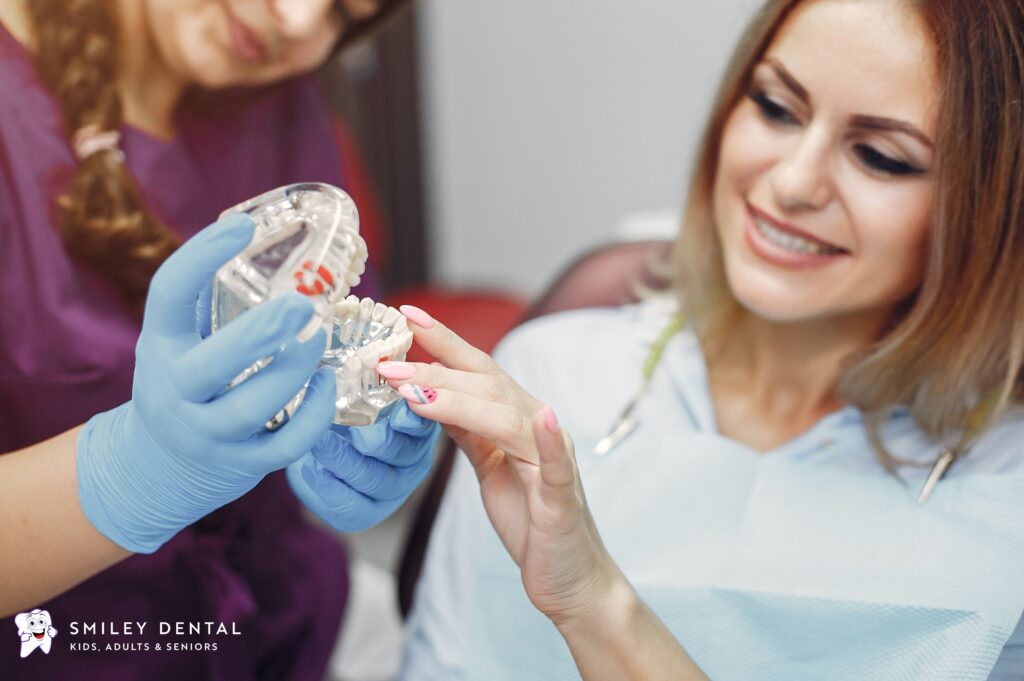
Invisalign is a system of custom-made, removable clear aligner trays that gradually shift teeth into a straighter position. Each tray is worn for one to two weeks before moving to the next in the series. Small tooth-colored attachments are sometimes added to help the trays grip and move certain teeth more precisely.
Because the trays are clear,Invisalign clear braces are popular with adults who want to straighten their teeth without the look of metal brackets during meetings, photos, or everyday conversations.
What Are Traditional Metal Braces?
Traditional braces use metal or ceramic brackets bonded to the front of each tooth, connected by an archwire. A dentist or orthodontist adjusts the wire periodically to apply steady pressure that moves teeth over time. Because braces are fixed in place, they work continuously without relying on the patient to remember to wear anything.
Traditional braces are often recommended for more complex bite corrections, significant rotations, or cases where consistent daily wear of removable trays may be difficult to maintain.
Appearance: Clear Aligners vs. Metal Brackets
This is usually the first difference patients notice. Invisalign trays are clear and fit closely over the teeth, so they’re far less noticeable than metal brackets and wires. Traditional braces are visible, though ceramic brackets offer a less conspicuous alternative to metal for patients who want a fixed appliance with a lower profile.
For adults in professional settings around Downtown Boston, Back Bay, or Roslindale who want a more discreet option, this is often the deciding factor.
Comfort: Which Feels Better Day to Day?
Invisalign trays are made of smooth plastic, so there are no metal edges to irritate the inside of the cheeks or lips. Some patients feel pressure or tightness for the first day or two after switching to a new tray in the series.
Traditional braces can cause more noticeable irritation, especially right after placement or an adjustment, since brackets and wires can rub against soft tissue. Orthodontic wax can help reduce discomfort during the adjustment period.
Removable vs. Fixed: Eating, Drinking, and Cleaning
Because Invisalign trays come out, patients can eat and drink normally without worrying about food restrictions. The trays are simply removed before meals and cleaned before going back in. Brushing and flossing also stay close to a normal routine.
Traditional braces are fixed, so certain foods, including sticky candy, popcorn, hard nuts, and very chewy items, should be avoided to prevent damaging brackets or wires. Cleaning around brackets requires extra tools, such as floss threaders or interdental brushes, to remove plaque effectively.
Treatment Effectiveness: What Each Option Can Fix
Both Invisalign and traditional braces can correct crowding, spacing, and many bite irregularities, but they aren’t always interchangeable for every case. Invisalign tends to work well for mild to moderate alignment issues in patients who reliably wear their trays for the recommended hours each day. Traditional braces provide continuous, fixed pressure, which can make them a better fit for more complex tooth movements or significant bite corrections.
The only way to know which option applies to your teeth is a clinical exam that evaluates your bite, tooth position, and jaw alignment.
Treatment Time: How Long Does Each Take?
Invisalign treatment for Invisalign Clear Braces at Smiley Dental Boston typically takes between twelve and eighteen months, depending on the complexity of the case and how consistently the trays are worn. Traditional braces often run somewhat longer, commonly in the range of eighteen to twenty-four months, though timelines vary widely based on the individual case.
Skipping tray wear or missing adjustment appointments can extend either treatment timeline.
Cost Considerations: Invisalign vs. Braces
Nationally, the cost gap between Invisalign and traditional braces has narrowed in recent years, and both options frequently fall within a similar overall price range. The exact cost depends on case complexity, treatment length, and the specific materials used, not simply which appliance type is chosen.
Factors that affect pricing for either option include:
- Complexity of the bite correction needed
- Length of treatment
- Number of adjustment or check-in visits required
- Whether attachments, retainers, or refinement trays are needed
- Dental insurance coverage or orthodontic benefits
Smiley Dental Boston accepts a range of dental insurance plans and offers flexible financing through options like CareCredit and Sunbit to help make treatment more manageable. Reviewing your insurances accepted or checking MassHealth eligibility ahead of a consultation can help clarify what coverage may apply.
An individualized cost estimate is only possible after an exam, since pricing depends on your specific treatment plan rather than a flat rate.
Maintenance and Daily Care
Invisalign requires more patient responsibility on a daily basis. Trays need to be worn 20 to 22 hours a day, removed for meals, brushed clean, and stored properly when not in use. Losing or forgetting a tray can set treatment back.
Traditional braces require less daily decision-making since they stay in place, but they call for more careful brushing and flossing technique, along with routine adjustment visits to keep treatment on schedule. Our guide on how to care for the Invisalign clear braces you wear covers day-to-day tray care in more detail.
Which Option Fits Your Lifestyle?
Invisalign may be a good fit if you:
- Want a more discreet, low-visibility treatment option
- Have mild to moderate crowding, spacing, or bite concerns
- Are consistent enough to wear trays 20+ hours a day
- Prefer being able to remove your aligners for meals and events
Traditional braces may be a better fit if you:
- Have more complex alignment or bite correction needs
- Would rather not manage removable trays every day
- Want a fixed appliance that works without daily compliance
- Are looking for an option that may better suit certain bite corrections
Neither option is universally better. The right choice depends on your teeth, your bite, and your daily habits. A consultation with a dentist who offers both options can help you compare them for your specific case.
Frequently Asked Questions
Invisalign can be highly effective for mild to moderate crowding, spacing, and certain bite issues, provided the trays are worn as recommended. For more complex bite corrections, traditional braces may offer more predictable mechanical control. A dental exam is the best way to determine which option will work for your specific teeth.
Cost depends on case complexity, treatment length, and materials rather than a flat citywide rate. Many patients find that Invisalign and traditional braces fall within a similar overall price range once total treatment is considered. A consultation provides the most accurate, individualized estimate.
Yes. Both Invisalign and traditional braces are commonly used for adult patients, and many adults choose treatment specifically to address crowding, spacing, or bite changes that developed over time. Age alone doesn’t rule out either option. Your dentist will evaluate your teeth and gum health to confirm candidacy.
Both can cause temporary discomfort. Invisalign trays may feel tight for a day or two after switching to a new tray, while traditional braces can cause more noticeable irritation from brackets and wires, especially after an adjustment. Discomfort from either option is usually temporary and manageable.
Retainers are typically needed after both Invisalign and traditional braces to help hold teeth in their new position. Your dentist will recommend a specific retainer schedule based on your treatment and how your teeth respond after your braces or aligners come off.
Why Choose Smiley Dental Boston for Invisalign and Braces
Smiley Dental Boston offers Invisalign clear braces through a team of Invisalign-certified providers at our Roslindale office, serving patients throughout Boston, Jamaica Plain, West Roxbury, Hyde Park, Mattapan, and Dorchester. Our dentists evaluate each patient’s bite, tooth position, and lifestyle before recommending a treatment path, rather than defaulting to one option for everyone.
We also offer flexible scheduling, multiple patient financing options, and support in English, Spanish, and Creole to make orthodontic care more accessible. If you’re weighing cosmetic dentistry options alongside straightening, our team can help you plan treatment that addresses both alignment and overall smile appearance.
Schedule Your Orthodontic Consultation in Boston
If you’re deciding between Invisalign and traditional braces, the best next step is a consultation where a dentist can examine your teeth and bite in person. Schedule an appointment with Smiley Dental Boston to discuss your treatment options, timeline, and cost.
Request an appointment or call 857-888-8000 to get started.