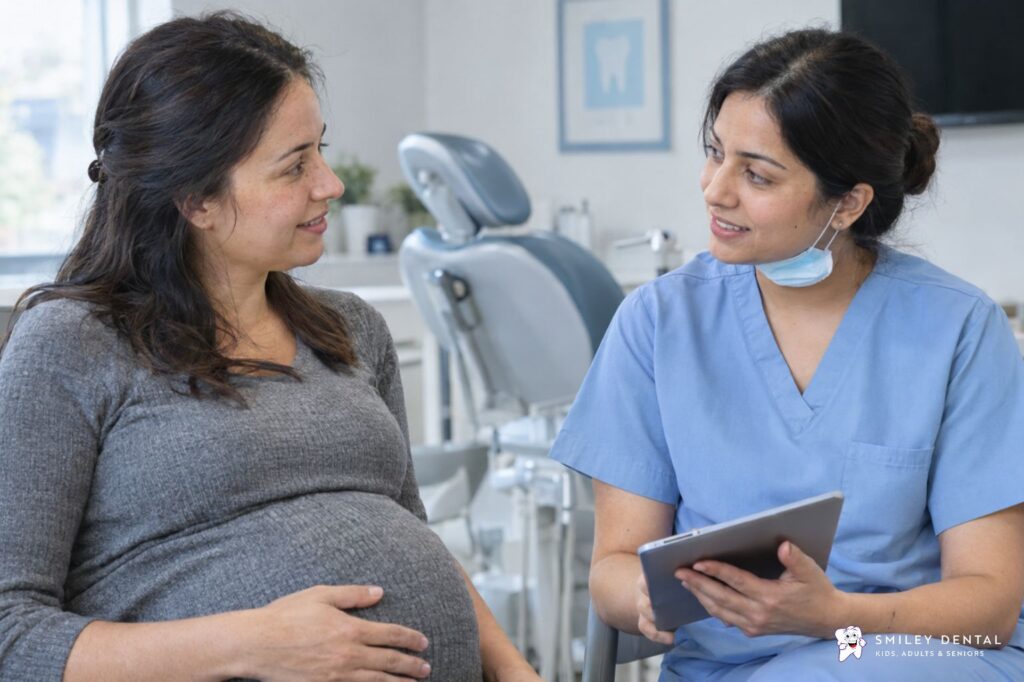
Yes, in most cases it is. Routine and necessary dental work during pregnancy and while breastfeeding is generally considered safe, including exams, cleanings, fillings, and treatment that uses local anesthesia. Always tell your dentist that you are pregnant or nursing, how far along you are, and which medicines you take. Some choices, such as sedation or certain prescriptions, need extra planning with your dentist and, when appropriate, your obstetric care team so medication safety stays front and center for both you and your baby.
Quick Answer: Is Dental Work Safe During Pregnancy or Breastfeeding?
Most routine and necessary dental treatments can be done during pregnancy and while breastfeeding. Exams, cleanings, fillings, and many procedures using local anesthesia are generally considered safe when planned well. During pregnancy, timing and medicines are chosen based on your needs. While nursing, medicine and sedation choices depend on the specific drug and your baby’s situation. Please don’t delay urgent care without talking to a dental professional first.
Is Dental Work Safe During Pregnancy?
Short answer: Yes, preventive, diagnostic, and necessary dental care can generally be done during pregnancy. The American Dental Association and ACOG both support getting appropriate dental care while pregnant.
That includes:
- A routine dental examination
- A professional dental cleaning
- X-rays, when they are clinically needed
- Fillings, root canal treatment, and extractions, when needed
- Treatment for gum disease
Why not just wait until after the baby arrives? Because untreated decay, pain, or infection can get worse, and an infection should not be ignored. Your dentist will weigh urgency, the procedure, and your medical history before recommending a plan.
Can I Get Dental Work Done While Breastfeeding?
Short answer: Yes. Many dental procedures can be done while breastfeeding. Exams, cleanings, fillings, and treatment with local anesthesia are generally compatible with nursing. The main question is whether a specific medicine, sedative, or anesthetic needs special precautions.
Tell your dentist you are nursing, and talk through any pain medicine or antibiotic they plan to prescribe. Please don’t stop breastfeeding or pump and discard your milk automatically after treatment. That advice is not right for every procedure. The right answer depends on the actual medication and your baby’s age and health.
For example, the National Library of Medicine’s LactMed database reports that lidocaine levels in breast milk are low and that no special precautions are generally needed. That only applies to lidocaine, though. It does not mean every dental medicine is safe while nursing.
What Dental Work Can You Not Get Done When Pregnant?
Short answer: There is no universal list of dental procedures that are banned during pregnancy. Necessary care can generally be done when it is clinically appropriate. Elective cosmetic work that can wait may be postponed, and treatments involving sedation or certain medicines need extra planning.
Here is how most dentists think about it:
- Necessary treatment: Dental pain, infected or badly damaged teeth, untreated decay, and significant gum disease should not automatically wait until after delivery.
- Elective treatment: Cosmetic whitening or veneers done only for appearance can often wait if waiting causes no clinical problem.
- Needs extra planning: Nitrous oxide, IV sedation, general anesthesia, certain prescriptions, and complex procedures. HRSA recommends discussing these with your obstetric provider.
What Trimester Is Safest for Dental Work?
Short answer: Routine and necessary dental care can be provided in all three trimesters. The second trimester is often a practical time for planned, nonurgent treatment because many people feel more comfortable then. It is not the only safe time. Pain, swelling, or infection should be checked right away, whatever trimester you are in.
First Trimester
Nausea and tiredness can make appointments harder, but needed care should not be avoided. Tell your dentist how you are feeling so the visit can move at a comfortable pace.
Second Trimester
Early symptoms often ease, and lying back in the chair is usually still comfortable. That makes it a convenient window for planned treatment, but not a requirement.
Third Trimester
Necessary care can still be done. Lying back for a long time can get uncomfortable, so your dentist may adjust your position or keep visits shorter. Some elective procedures may reasonably wait until after delivery.
Please don’t put up with a toothache until the second trimester. If something hurts, get it checked.
Are Dental X-Rays Safe During Pregnancy?
Short answer: Dental X-rays can be taken during pregnancy when they are clinically needed. Your dental team should use current radiation-safety practices (see ADA MouthHealthy) and only take images that help with diagnosis or treatment planning.
An X-ray can reveal hidden decay or infection that cannot be seen during an exam. Tell the team you are pregnant before any imaging, and ask whether the X-rays are needed right now. Ask your dentist about their current imaging protocols too.
If you are breastfeeding, a dental X-ray does not make your milk radioactive. It is not a reason to stop nursing.
Is Local Anesthesia Safe During Pregnancy?
Short answer: Local anesthetics used in dentistry can be given during pregnancy when appropriately chosen. Controlling pain matters, so you should not have to tough out a procedure.
Your dentist will consider the type of anesthetic, the dose, and your medical history. If your pregnancy is high-risk, they may check with your obstetric provider first.
Local anesthesia is not the same as nitrous oxide, IV sedation, or general anesthesia. Those options carry different considerations and need individual planning.
Can I Breastfeed After Dental Anesthesia?
Short answer: Usually yes after a local anesthetic such as lidocaine. Stopping nursing is not ordinarily required because of local anesthesia alone.
Sedation and general anesthesia are different. They use other medicines, so the advice depends on:
- Which drugs were used and the dose
- Your baby’s age and health
- How alert you feel afterward
If you had sedation, arrange help with baby care until you feel fully alert. Ask your dentist, pharmacist, or pediatrician for guidance on that specific medicine.
What Should You Know About Dental Medications During Pregnancy?
Short answer: Medicine safety depends on the specific drug, the dose, the timing, and your health. There is no one-size-fits-all list.
Your dentist should know about your pregnancy and your current prescriptions before choosing an antibiotic, pain reliever, or sedative. Please don’t self-medicate with over-the-counter pain relievers, and don’t stop a prescribed medicine, without checking with a professional. Your obstetric provider may need to weigh in if your pregnancy is high-risk.
What Medicines Can You Take While Breastfeeding After Dental Work?
Short answer: It varies by medicine. Some are compatible with breastfeeding and some need precautions, so check each one.
Before treatment, tell your dentist:
- That you are breastfeeding, and your baby’s age
- If your baby was born early or has health conditions
- What medicines and supplements you already take
- Any medication allergies
Then check the specific drug in LactMed and ask your dentist, doctor, pharmacist, or pediatrician. Not every medicine passes into milk in a harmful amount, and not every medicine is automatically safe either.
Can You Get a Filling, Root Canal, or Tooth Extraction While Pregnant?
Short answer: Yes, when they are clinically needed. These treatments address decay, pain, infection, or damage that can get worse if left alone.
Fillings
Repairing a cavity early can prevent more damage. Tooth-colored fillings can be placed during pregnancy when needed.
Root Canals
Root canal treatment may be needed when the inside of a tooth is inflamed or infected.
Tooth Extractions
An extraction may be the right choice when a tooth can’t reasonably be saved.
Your dentist will consider your medical history, stage of pregnancy, anesthesia needs, and how urgent the problem is. These procedures should not automatically be pushed to after delivery.
How Pregnancy Can Affect Teeth and Gums
Short answer: Pregnancy can change your oral health, even if your teeth and gums were healthy before. The CDC also covers oral health concerns during pregnancy.
Pregnancy Gingivitis
Hormonal changes can make gums react more strongly to plaque. You may see tender, swollen, or bleeding gums. Periodontal therapy may help if it doesn’t settle.
Cavities
Frequent snacking, dry mouth, and skipped brushing can raise your risk.
Enamel Erosion
Repeated vomiting or reflux exposes teeth to stomach acid.
Daily Habits That Help
Simple habits help: brush twice a day with fluoride toothpaste, clean between your teeth daily, sip water often, and limit sugary snacks. After vomiting, rinse with water instead of brushing right away. Preventive dental care can help you stay on track.
How Long Does Breastfeeding Affect Mother’s Teeth?
Short answer: There is no fixed length of time. Breastfeeding does not directly pull calcium out of adult teeth, and it should not be assumed to cause cavities or tooth loss.
What often affects a mother’s teeth is everything around it: pregnancy-related gum changes, vomiting, snacking, dry mouth, existing decay, and less time for self-care with a newborn. These issues can continue after delivery until they are treated.
If you notice sensitivity, bleeding gums, or a new cavity after having your baby, don’t blame nursing and wait. Get a dental exam to find the real cause. Please don’t wean just because of a dental problem without talking with your dentist and doctor.
Does Pregnancy Take Calcium From Your Teeth?
Short answer: No. Pregnancy does not directly draw calcium out of your teeth to build your baby’s skeleton.
Your body manages calcium through bone metabolism, not by removing it from tooth enamel. This NIH-hosted article discusses maternal and infant oral health. That said, pregnancy does come with real dental risks, like gum inflammation, acid exposure, and dry mouth, which is why checkups still matter.
Should Cosmetic Dental Work Wait Until After Pregnancy?
Short answer: Often it can. Elective cosmetic work, such as whitening or veneers, usually does not need to be rushed during pregnancy if it isn’t treating disease, pain, or damage.
That isn’t because every cosmetic procedure is unsafe. It’s because the work can wait, and some products or medicines need extra thought. While breastfeeding, any procedure that involves medication or sedation should still be reviewed case by case.
When Should Dental Treatment Not Be Delayed?
Short answer: Pregnancy or breastfeeding should not stop you from getting care for significant tooth pain, infection, swelling, or a damaged tooth. Contact the dental office promptly about:
- Severe or lasting tooth pain
- A suspected abscess or dental infection
- Facial swelling
- A cracked, broken, or knocked-out tooth
For these problems, same-day emergency care can help. If swelling is spreading, you have a fever with a dental infection, or you have trouble swallowing or breathing, seek urgent medical care. Trouble breathing or swallowing is an emergency.
How to Prepare for a Dental Appointment While Pregnant or Breastfeeding
Short answer: A little preparation helps your dentist plan safe care. You don’t need an obstetrician’s note for every routine visit, but check in with your obstetric provider when a procedure or medicine calls for it.
If you are pregnant:
- Tell the dental office how many weeks along you are.
- Share medical conditions and a current medication list.
- Describe your symptoms, including nausea or reflux.
- Ask whether X-rays are really needed.
- Ask about pain control and appointment length.
If you are breastfeeding:
- Tell the dental office you are nursing, and share your baby’s age.
- Share your medicines and allergies.
- Ask which anesthetic or sedative will be used.
- Ask whether you can nurse as usual afterward.
- Arrange help with baby care if sedation is planned.
Pregnancy vs. Breastfeeding: Quick Comparison
| Treatment | During Pregnancy | During Breastfeeding |
|---|---|---|
| Exam and cleaning | Generally appropriate | Generally appropriate |
| X-rays | When clinically indicated | When clinically indicated |
| Fillings, root canals, extractions | When clinically needed | When clinically needed |
| Local anesthesia | Can be used when appropriate | Lidocaine is generally compatible |
| Sedation | Needs extra planning | Needs medication-specific review |
| Pain medicine and antibiotics | Chosen for pregnancy | Chosen for the drug and your baby |
| Elective cosmetic work | May wait if nonurgent | Review individually |
This table is general education, not a treatment plan.
If you live in Roslindale, Mattapan, Hyde Park, Dorchester, Jamaica Plain, or West Roxbury, you can ask the Smiley Dental Boston team about exams, cleanings, restorative care, and emergency visits. Coverage depends on your plan, so check the insurances accepted page and confirm benefits with your insurer.
Frequently Asked Questions
Yes, in many cases. Routine care and local anesthesia are generally compatible with nursing. Review any other medicine with your dentist or pharmacist.
There is no universal list. Necessary care can generally be done. Elective cosmetic work can often wait, and sedation or certain medicines need extra planning.
Care can be done in any trimester. The second often feels most comfortable for planned work, but urgent problems should be treated right away.
There is no set timeline. Breastfeeding doesn’t pull calcium from adult teeth. Ongoing dental problems should be examined and treated.
They can be taken when clinically needed, using current safety practices.
Yes, when needed. Waiting can allow decay or infection to get worse.
Usually not after local anesthesia. For sedation or other medicines, ask for advice about that specific drug.
No. Gum inflammation, acid, dry mouth, and diet are the more likely causes of pregnancy-related dental problems.
Schedule a Dental Appointment
If you are pregnant, breastfeeding, or planning dental care after childbirth, please don’t assume you have to postpone necessary treatment. The Smiley Dental Boston team can talk through your symptoms, medical history, and options at your pace, with no judgment.
Request an appointment or contact the Boston office at 857-888-8000.