A whiter smile is one of the most requested cosmetic improvements in dentistry. A brighter smile communicates confidence, health, and energy. With so many whitening options now available, from in-office treatments to strips, trays, and toothpastes sold at every pharmacy, many patients wonder which route actually delivers safe, lasting results.
The answer depends on the type of staining you have, the health of your teeth and gums, and how much time and investment you’re willing to commit. At Smiley Dental Boston, we help patients navigate these options honestly so they get the outcome they’re looking for without risking their enamel or gum health. Here’s a straightforward comparison of professional and at-home teeth whitening in Boston.
1. How Professional Teeth Whitening Works
Professional whitening performed at a dental clinic uses clinically tested bleaching agents at concentrations that are not available in consumer products. The higher strength of these agents allows them to penetrate enamel and break down the molecular compounds responsible for deep, stubborn discoloration more effectively than anything you can buy over the counter.
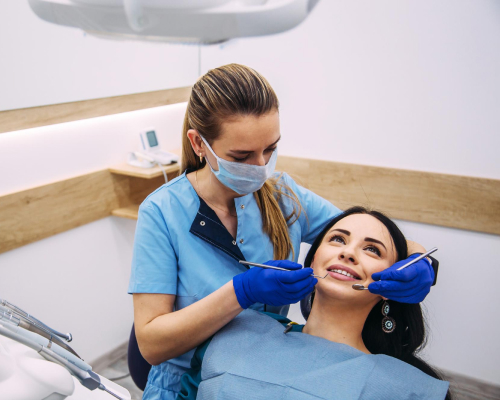
In-office treatment typically involves a single appointment lasting sixty to ninety minutes. A protective barrier is applied to your gums before the whitening gel is administered to the tooth surfaces. Many practices use a curing light or laser to activate the gel and accelerate the process.
Patients generally see results several shades brighter after a single visit. For those who want gradual improvement with more control over the final shade, a dentist can also provide custom-fitted take-home trays with professional-grade gel that delivers better results than store-bought kits because the trays fit precisely and the concentration of the bleaching agent is stronger.
The key advantage of professional treatment is supervision. Your dentist assesses your enamel health, gum condition, and stain type before recommending a protocol. Whitening on damaged enamel, active cavities, or inflamed gum tissue can cause significant sensitivity and pain. A professional evaluation eliminates that risk before treatment begins.
2. The Reality of At-Home Whitening Products
The whitening aisle at any drugstore offers a wide range of strips, trays, pens, and rinses, and the marketing behind these products is confident. In practice, results vary considerably and come with several limitations worth understanding before you invest.
Over-the-counter whitening products contain lower concentrations of hydrogen peroxide or carbamide peroxide than professional treatments. This means the bleaching action is weaker, takes longer, and is less able to address intrinsic stains that have settled into the deeper layers of enamel over time.
Common issues with at-home products include:
- Uneven whitening because strips and one-size trays don’t conform precisely to every patient’s tooth shape, leaving some surfaces undertreated
- Gum irritation caused by gel contact with soft tissue due to poor fit
- Sensitivity from repeated or prolonged application, particularly in patients with existing enamel wear
- Disappointing results on stains caused by aging, medications, or trauma, which don’t respond well to lower-concentration agents regardless of how consistently they’re used
At-home products are best suited for patients with mild surface staining and healthy, intact enamel. They are not appropriate as a substitute for professional care in patients with active gum disease, decay, or significant intrinsic discoloration.
3. Why Gum Health Affects Whitening Outcomes
One aspect of teeth whitening that rarely gets discussed in consumer marketing is the relationship between periodontal health and whitening results. This connection is clinically important and directly relevant to patients in Boston considering any form of whitening treatment.
Inflamed or infected gum tissue is far more sensitive to whitening agents than healthy tissue. Patients with untreated gum disease who attempt whitening frequently experience heightened sensitivity, increased discomfort during treatment, and, in some cases, worsening of gum symptoms. More significantly, whitening does not address the underlying cause of discoloration in patients where gum recession has exposed root surfaces, as roots do not respond to bleaching agents the way enamel does.
For patients dealing with active gum disease or early signs of periodontal breakdown, periodontal treatment Boston providers should address gum health before any whitening is undertaken. Scaling and root planing stabilize the tissue and reduce inflammation, creating the healthy foundation that professional whitening requires to work safely and effectively.
If you’ve noticed bleeding when brushing, persistent bad breath, or gum recession alongside your interest in whitening, speak with your dental team about sequencing. Treating gum disease first is not a detour from your whitening goal. It’s what makes the outcome safe and lasting.
4. Who Should Consider Professional Whitening in Boston
Professional teeth whitening Boston is appropriate for a wide range of patients but is especially beneficial for those who:
- Have moderate to significant staining from coffee, tea, wine, or tobacco
- Have tried over-the-counter products without satisfying results
- Want predictable outcomes within a set timeframe
- Have sensitive teeth and need a supervised, controlled protocol
- Are preparing for a special event and need reliable results quickly
- Want to combine whitening with other cosmetic treatments, such as veneers or bonding, for a complete smile improvement
Patients in the Roslindale neighborhood and surrounding areas looking for accessible cosmetic dental care will find that smiley dental roslindale services are available through our Boston practice, offering the same standard of professional whitening care with convenient access for patients across the city.
5. Maintaining Your Results After Whitening
Whether you choose professional or at-home whitening, results are not permanent. Teeth will naturally re-stain over time with exposure to pigmented foods and beverages. What you do in the weeks and months following treatment has a significant impact on how long your results last.
Practical steps to extend whitening results include:
- Avoiding or reducing coffee, tea, red wine, and dark sauces in the days following treatment, when enamel is most porous
- Rinsing with water promptly after consuming staining foods or beverages
- Using a whitening toothpaste recommended by your dentist for maintenance
- Brushing twice daily and flossing consistently to prevent surface buildup
- Scheduling touch-up treatments at appropriate intervals as recommended by your dental team
Most professionally whitened smiles maintain their brightness for one to three years with good home care. Patients who combine professional whitening at Smiley Dental Boston with regular professional cleanings tend to see the longest-lasting results.
Conclusion
Professional and at-home whitening both have a place in cosmetic dentistry, but they are not interchangeable. If you want safe, predictable, and lasting results, professional treatment backed by a proper dental assessment is the smarter choice. Whether you have surface stains or deep discoloration, the right starting point is always a conversation with your dental team about what will actually work for your smile.
Frequently Asked Questions (FAQs)
1. Is professional whitening stronger than store kits?
Yes. Professional bleaching agents are significantly more concentrated, delivering faster, more even, and longer-lasting results than anything available over the counter.
2. Can I whiten my teeth if they are sensitive?
Yes. Your dentist can adjust the protocol, use desensitizing agents, or recommend a gentler gel to keep the process comfortable throughout.
3. Do I need periodontal treatment before whitening?
If you have active gum disease or recession, yes. Treating gum health first ensures whitening is safe, comfortable, and delivers lasting results.
4. How long do whitening results last?
Most patients see results lasting one to three years. Limiting staining foods and maintaining consistent oral hygiene extend your results significantly.
5. How do I book a whitening consultation in Boston?
Visit our teeth whitening page to learn about our services and schedule your evaluation with the team at Smiley Dental Boston.