
Quick Answer
In Boston, a single dental implant typically costs between $3,500 and $6,000, including the implant post, abutment, and crown. Full-mouth implant treatment can range from $20,000 to $45,000 or more per arch, depending on the number of implants needed, bone health, and whether bone grafting is required. At Smiley Dental Boston, we provide a personalized cost estimate after a consultation, since every patient’s treatment plan is different.
If you’re missing one or more teeth and looking into dental implants, cost is probably the first question on your mind, and that’s completely fair. Implants are an investment, and understanding what goes into the price helps you plan with confidence instead of guessing. In this guide, we’ll break down what dental implants are, how they work, who they’re right for, and the specific factors that affect pricing here in the Boston area.
What Are Dental Implants?
A dental implant is a small titanium or zirconia post that’s surgically placed into the jawbone to act as an artificial tooth root. Once it’s in place, a connector piece called an abutment attaches a custom-made crown on top, giving you a replacement tooth that looks, feels, and functions like a natural one.
Implants are different from bridges or dentures because they don’t rely on neighboring teeth or removable appliances. Instead, they integrate directly with your jawbone through a process called osseointegration, giving you a permanent, stable foundation.
According to the National Institute of Dental and Craniofacial Research (NIDCR), tooth loss remains a common concern for adults in the United States, particularly as people age. That’s part of why implants have become such a widely used solution; they address both the appearance and the function of a missing tooth.
How Do Dental Implants Work?
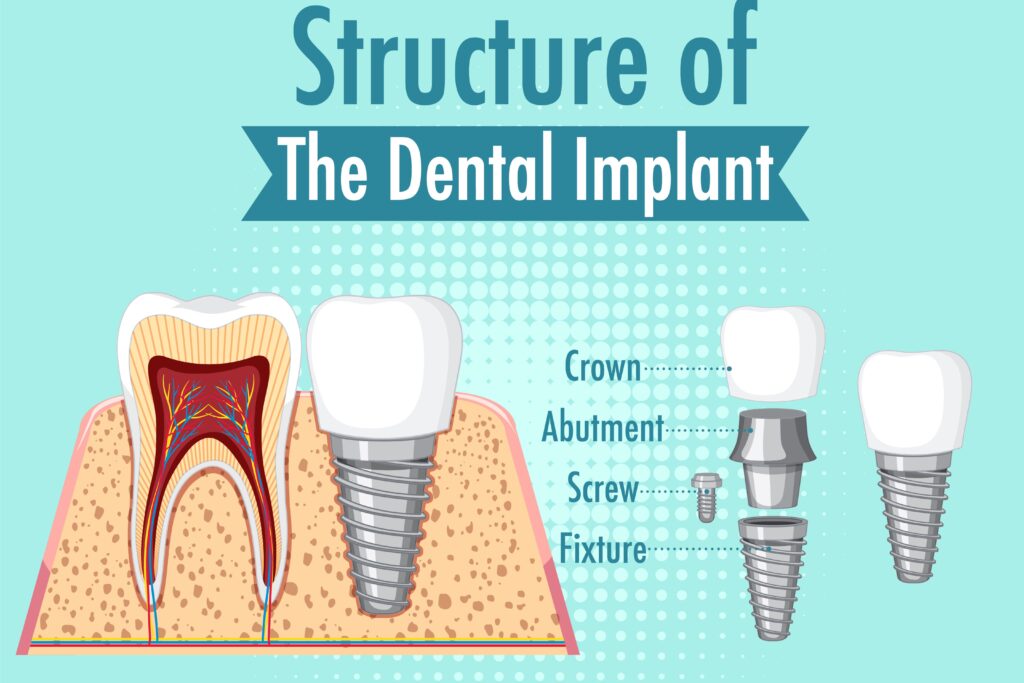
Dental implants work by mimicking the structure of a natural tooth. There are three main parts:
- The implant post: a titanium or zirconia screw placed into the jawbone
- The abutment: a small connector that attaches to the implant post
- The crown: the visible, tooth-shaped restoration that sits on top
Over a period of several months, the jawbone naturally fuses to the implant post. This bond is what gives implants their strength and long-term stability, allowing them to support normal biting and chewing forces just like a real tooth root would.
Who Is a Good Candidate for Dental Implants?
Most healthy adults missing one or more teeth are candidates for dental implants, but a few factors matter most:
- Sufficient jawbone density to support the implant (or the ability to undergo bone grafting first)
- Healthy gums, free of active periodontal disease
- Good overall health, since healing ability affects implant success
- Non-smokers or those willing to reduce smoking, since tobacco use can slow healing and affect long-term success
Patients with diabetes, osteoporosis, or a history of gum disease can often still qualify for implants, but treatment may need to be planned more carefully. The best way to know for sure is a consultation and imaging review with your dentist.
Benefits of Dental Implants
Dental implants offer several advantages over other tooth replacement options:
- Look and feel natural: implants are custom-shaped and shaded to match your smile
- Preserve jawbone health: unlike bridges or dentures, implants stimulate the bone and help prevent the bone loss that often follows tooth loss
- Don’t rely on neighboring teeth: bridges require grinding down healthy adjacent teeth; implants stand on their own
- Built to last: with proper care, implants can last for decades, often outlasting other restorative options
- Support normal eating and speaking: implants function like natural teeth, so there’s no slipping or shifting
Step-by-Step Dental Implant Procedure
While every treatment plan is customized, the general implant process usually follows these steps:
- Consultation and imaging: your dentist evaluates your jawbone, gum health, and overall candidacy using X-rays or a 3D scan.
- Treatment planning: a personalized plan is created, including whether bone grafting is needed first.
- Implant placement: the titanium or zirconia post is surgically placed into the jawbone under local anesthesia.
- Healing and osseointegration: over roughly three to six months, the bone fuses to the implant.
- Abutment placement: a small connector piece is attached once healing is complete.
- Custom crown placement: a crown matched to your natural teeth is fitted and secured on top.
The full process can take several months from start to finish, but most of that time is healing rather than time spent in the dental chair.
Recovery and Aftercare
Recovery after implant surgery is generally manageable for most patients. Here’s what to expect:
First 24–48 hours: Mild swelling, tenderness, and slight bleeding are normal; over-the-counter or prescribed pain relief usually helps
First week: Stick to soft foods and avoid chewing directly on the implant site
Oral hygiene: Gentle brushing and rinsing as directed by your dentist helps prevent infection
Follow-up visits: Your dentist will monitor healing and confirm the implant is integrating properly before placing the final crown
Long-term care: Regular brushing, flossing, and dental checkups keep implants healthy for the long run, just like natural teeth
Most patients return to normal daily activities within a few days, though full bone integration takes longer.
Cost Factors of Dental Implants
There isn’t one flat price for dental implants because the cost depends on several individual factors:
- Number of teeth being replaced: A single implant costs less than a full-arch or full-mouth solution
- Bone grafting needs: Patients with bone loss may need grafting before implant placement, which adds to the cost
- Type of restoration: A single crown, an implant-supported bridge, or an implant-supported denture each carry different price points
- Materials used: Titanium versus zirconia implants, and the quality of the crown material
- Location and technology: Practices using advanced imaging and digital planning tools may have different pricing than smaller practices
- Insurance coverage: Many dental insurance plans offer partial coverage for implants, especially when they’re considered medically necessary
- Additional procedures: Extractions, sinus lifts, or gum treatment prior to implant placement can affect total cost
In the Boston area, a single implant (post, abutment, and crown) generally falls between $3,500 and $6,000. Full-mouth implant solutions can range significantly higher, often between $20,000 and $45,000 per arch, depending on complexity. Because pricing varies so much by case, the most accurate number comes from an in-person consultation and imaging review.
If cost is a concern, it’s worth asking about financing options. Many practices, including Smiley Dental Boston, offer flexible payment plans and membership options for patients without insurance.
Why Choose Smiley Dental Boston for Dental Implants?
At Smiley Dental Boston, we’ve been helping patients throughout Boston and Roslindale restore their smiles since 2013. Our team includes experienced dentists trained in implant placement and restorative dentistry, and we use modern imaging technology to plan each case with precision.
We understand that cost is a real factor in your decision, which is why Smiley Dental Boston provides a clear, itemized treatment plan before any work begins, no surprises, no guesswork. We also work with most major insurance providers and offer flexible financing options for patients who need them. Whether you need a single implant or a more complete restoration, our Roslindale office is equipped to guide you through every step of the process.
Conclusion
Dental implants are one of the most reliable, long-lasting ways to replace missing teeth, and understanding the cost factors ahead of time makes the decision much easier. While pricing depends on your unique needs, most patients in the Boston area find that the long-term value of implants, including durability, natural function, and jawbone preservation, makes them a worthwhile investment.
Ready to improve your smile? Schedule an appointment with Smiley Dental Boston today and receive personalized care from our experienced dental team.
Frequently Asked Questions
Coverage varies by plan. Some dental insurance policies cover a portion of implant costs, especially when the implant is considered medically necessary, while others may only cover the crown portion. Our team at Smiley Dental Boston can help verify your specific benefits.
With proper care, including regular brushing, flossing, and dental checkups, implants can last 20 years or longer. Many patients keep their implants for life.
Most patients report only mild discomfort, similar to a tooth extraction, since the procedure is done under local anesthesia. Post-surgical soreness is usually manageable with standard pain relief.
Yes, in many cases. Bone grafting can rebuild the jawbone density needed to support an implant, though this may add time and cost to your treatment plan.
From initial placement to final crown, the process typically takes three to six months, mainly due to the healing and osseointegration period. Some patients with strong bone density may qualify for faster treatment timelines.
Implants tend to offer better long-term stability and preserve jawbone health more effectively than dentures or bridges, but the right option depends on your individual oral health, budget, and goals. A consultation can help determine the best fit for you.
A single tooth implant in the Boston area, including the post, abutment, and crown, typically ranges from $3,500 to $6,000, though the exact cost depends on your specific case and any additional treatment needed beforehand.